8 Best Free SD Card Recovery Software (2026): Reviewed & Ranked
The best free SD card recovery software should pull photos, videos, and RAW files off a deleted or formatted memory card without locking everything behind a paywall. We evaluated 18 leading free-tier and fully free tools for Windows and Mac on recovery performance, RAW camera format coverage, free-size limits, and real user feedback from independent testing, Reddit, and photography forums — then ranked the top 8. Here’s which software stands out in 2026.
+ 6 honorable mentions
· user feedback
FAT32 / exFAT focus
Win 11 24H2 / macOS 15
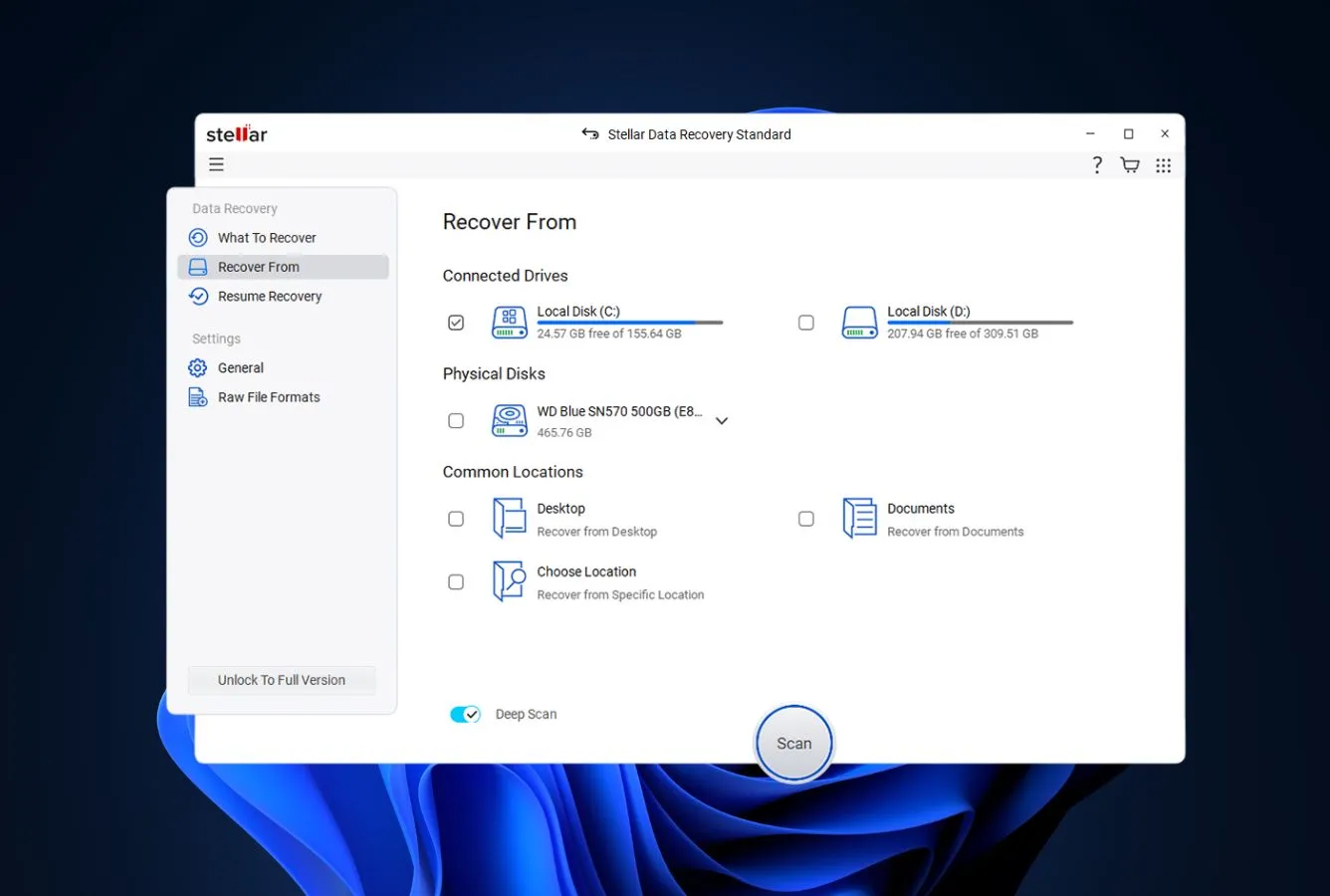
EaseUS Data Recovery Wizard Free is the best free SD card recovery software in 2026. Its 2GB free ceiling (500MB default plus 1.5GB unlocked via a social share) is the most generous among GUI-based tools, and the FAT32/exFAT support that matters for SD cards works reliably on both Windows and macOS. PhotoRec is the strongest no-limit alternative — open source, truly free forever, and excellent on RAW photos from formatted cards if you can stomach a text-mode interface. Recuva rounds out the top three as the friendliest no-cap Windows option for simple undelete jobs.
 EaseUS Data Recovery Wizard Free
- 2GB free recovery (500MB default + 1.5GB via social share)
- FAT32, exFAT, NTFS, HFS+, APFS on one installer
- Unlimited scanning, full preview before recovery
- Free for SD, microSD, SDHC, SDXC — Windows + Mac
 PhotoRec
- Unlimited free — GPL v2+ open source, no paid tier
- Over 480 file signatures including Canon CR2/CR3, Nikon NEF, Sony ARW
- Cross-platform: Windows, macOS (Apple Silicon), Linux, BSD
- Read-only card handling, no risk of further damage
 Recuva
- Unlimited recovery in the free tier — no file cap
- Deep Scan mode for formatted and recently lost cards
- Recovery-chance rating next to every found file
- Windows only — no Mac or Linux build exists
- 1EaseUS Data Recovery Wizard Free – Most Generous Free Tier
- 2PhotoRec – No-Limit Open-Source Recovery
- 3Recuva – Simplest Free Undelete for Windows
- 4DMDE Free Edition – Deepest Low-Level Scanner
- 5DiskDigger – Unlimited Photo Recovery with a Catch
- 6TestDisk – Partition Repair for RAW SD Cards
- 7Disk Drill Free – Camera Video Fragment Recovery
- 8Wondershare Recoverit Free – Fragmented Video Restoration
8 Best Free SD Card Recovery Software – Quick Comparison
Free SD card recovery tools break into three camps: polished GUIs with capped free tiers (EaseUS, Disk Drill, Recoverit), fully free open-source tools with text-heavy interfaces (PhotoRec, TestDisk, DMDE), and Windows-focused lightweight undelete utilities (Recuva, DiskDigger). The table below summarizes each on free ceiling, RAW photo support, platform coverage, and where each one earns its place in the ranking.
| Tool | Overall Strength | RAW Photo Support | Platforms | Ease of Use | Free Limit | License | Best For |
|---|---|---|---|---|---|---|---|
| EaseUS DR Wizard Free | Excellent | Strong | Win + Mac | Excellent | 2 GB (500 MB + share) | Freemium | Most users wanting a GUI |
| PhotoRec | Excellent | Excellent (480+ sigs) | Win + Mac + Linux | Steep (text UI) | Unlimited | GPL v2+ OSS | Formatted or RAW cards |
| Recuva | Very Good | Limited (common only) | Windows only | Excellent | Unlimited (free tier) | Freemium | Simple Windows undeletes |
| DMDE Free | Very Good | Strong (sector-level) | Win + Mac + Linux | Steep | 4,000 files / dir | Freemium | Corrupted / RAW cards |
| DiskDigger | Good | Strong | Win + Linux | Good | Unlimited (5s delay) | Freemium | Photo-focused recovery |
| TestDisk | Specialized | N/A (partition tool) | Win + Mac + Linux | Steep (text UI) | Unlimited | GPL v2+ OSS | RAW cards / broken partitions |
| Disk Drill Free | Good | Strong + video repair | Win + Mac | Excellent | 100 MB (Win); 0 (Mac) | Freemium | GoPro / DJI video fragments |
| Wondershare Recoverit Free | Good | Strong + video repair | Win + Mac | Excellent | 100 MB | Freemium | Fragmented video restoration |
Overall-strength labels reflect editorial evaluation based on feature coverage, independent research, and user-feedback patterns — not an in-house benchmark. Free limits and licensing are from each vendor’s current product pages as of April 2026.
8 Best Free SD Card Recovery Software – In-Depth Reviews
1. EaseUS Data Recovery Wizard Free – Most Generous Free Tier
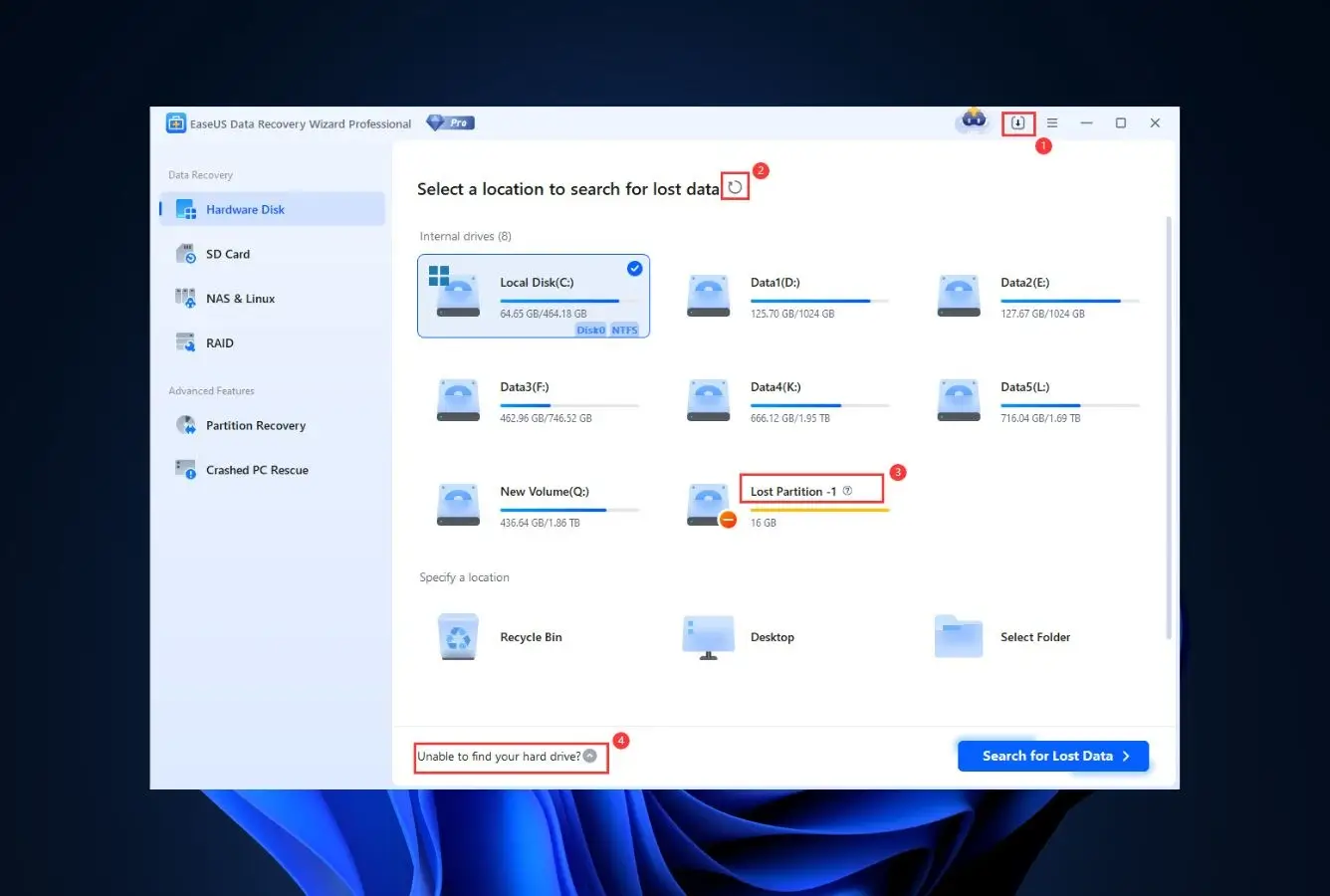
EaseUS Data Recovery Wizard Free is the rare free SD card tool that does not ask you to choose between a generous free cap and a usable interface. The default 500MB free tier lifts to 2GB the moment you share a link on a social account — a one-time trade that opens up enough capacity to recover a full day’s worth of JPEGs plus several 4K clips from a mirrorless shoot. Cross-referenced independent testing consistently places EaseUS among the top two recovery tools specifically on FAT32 and exFAT cards, which happens to be every SD card sold at retail. Reddit threads on r/datarecovery echo the same pattern: the tool works first try on deleted and quick-formatted cards, and the preview actually previews — you see thumbnails of the photos before you commit any of the 2GB cap.
- 2GB free ceiling is the largest among GUI tools — enough for a full day of mirrorless JPEGs plus several 4K clips
- FAT32 and exFAT recovery preserves original folder structure and file names, not just raw signatures
- Preview thumbnails for JPEG, MP4, CR2/CR3, NEF, ARW, HEIC before you spend any of the free quota
- Wizard-based UI means non-technical photographers reach recovery in under two minutes
- Single installer supports SD, microSD, SDHC, SDXC, and CF cards across Windows and macOS 11+
- 2GB cap still hurts if you’re recovering an entire shoot or a card full of RAW
- The social-share unlock nag prompts repeatedly until you complete it
- NTFS recovery is stronger than FAT32 on complex corruption, but very few SD cards use NTFS
Top-tier on the file systems that actually matter for SD cards.
Independent testing consistently places EaseUS in the top two on FAT32 and exFAT — the file systems every consumer SD card ships with. The scanner handles deleted files, quick-formatted cards, RAW cards, and corrupted partitions, and the deep scan pulls camera RAW formats from Canon, Nikon, Sony, Fujifilm, and Panasonic bodies. The free tier does not throttle the scanner itself — only the recovery-write step — so you can see everything that’s recoverable before deciding whether 2GB is enough.
The benchmark the other freemium tools get compared to.
The three-step wizard (select card → scan → preview/recover) is the single most consistent praise point in G2 and Trustpilot reviews. The filter sidebar organizes results by type (photos, videos, documents, audio) and lets you narrow to specific formats, and the preview window actually previews — thumbnails for photos, playable clips for video, first-page render for PDFs and DOCX. First-time users rarely need to consult documentation, which is not true of DMDE or PhotoRec.
Free 2GB is genuinely useful; the paid tier is aggressively priced.
The free tier covers most single-incident SD card losses if you’re selective about what you restore — JPEGs from a day trip, a handful of 4K clips, or an assortment of documents. Once you need more, the Pro license runs $69.95 for an annual subscription with auto-renewal on by default, so set a calendar reminder if you only need it once. The lifetime license is periodically discounted but not a published standing offer. For most readers of this guide the free tier is the only tier they’ll ever need.
2. PhotoRec – No-Limit Open-Source Recovery
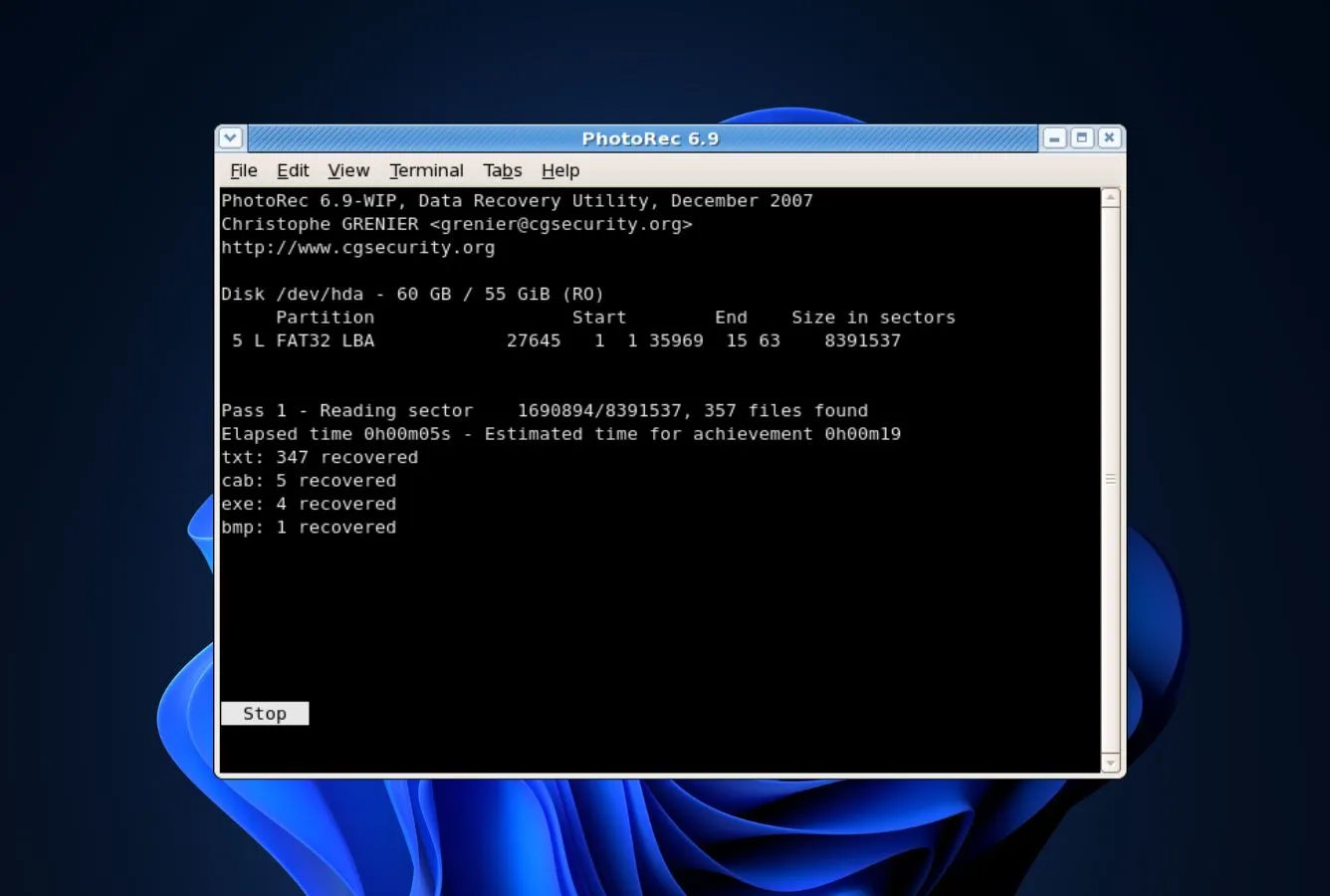
PhotoRec is the tool free-SD-card recovery was effectively invented for. It ignores file systems entirely and scans sector-by-sector for file signatures — the opening byte patterns that identify a JPEG, an MP4, a Canon CR3, or a Word document. That design is exactly what you want on a card that’s been formatted, turned RAW, or has a trashed directory, because the original file structure is gone but the underlying data blocks are usually intact. It’s GPL v2+ open source, cross-platform down to BSD, and its signature database covers over 480 file extensions including every mainstream RAW camera format. The catch is entirely about presentation: the UI is a text-mode menu that looks like something from 1995, with no thumbnails, no file browser, and no ability to selectively recover specific photos — it’s all-or-nothing per chosen file type.
- Genuinely free forever — GPL v2+, no nag screens, no paid tier that unlocks the “real” features
- 480+ file signatures including Canon CR2/CR3, Nikon NEF, Sony ARW, Fujifilm RAF, Panasonic RW2
- Works when every other tool fails — bypasses corrupted file systems by going straight to sectors
- Native Apple Silicon build via Homebrew, plus Intel/Windows/Linux/BSD binaries from CGSecurity
- Read-only card handling — PhotoRec physically cannot overwrite or further damage the source card
- Text-mode UI is a learning curve even for experienced Windows/Mac users
- No preview, no thumbnails, no selective file recovery — you recover everything of the chosen types
- Original filenames are lost; files come back as f00001234.jpg and you re-sort by hand or EXIF
The strongest free option on formatted and RAW SD cards, full stop.
Signature-based carving is slower than metadata-based scanning, but it keeps working long after the file system has stopped cooperating. Independent testing on RAW/formatted SD cards consistently places PhotoRec at or near the top among free tools for total recoverable file count, especially on camera RAW formats where commercial tools with narrower signature lists miss shots. The 480+ file database is actively maintained — recent releases added signatures for newer Canon R-series CR3 variants and Sony’s updated ARW structure.
The trade you make for “actually free” is the UI.
PhotoRec is driven by arrow keys and Enter in a terminal window. There’s a Windows-only graphical wrapper called qPhotoRec that adds a basic file picker, but it’s still a long way from EaseUS or Recuva. On macOS, the Homebrew install is a two-command setup; on Windows, the direct download works fine. The process walks through partition → filesystem → file-type selection → output location, and once running, it prints a live count of recovered files per type. Plan on an evening with it, not twenty minutes.
Free as in speech, free as in beer, free as in “donations welcome but optional.”
GPL v2+ licensing means CGSecurity can’t paywall it, even if they wanted to. There’s a donation link on the project page and nothing else to pay. For anyone recovering more than 2GB of photos or video from an SD card — which is basically anyone recovering a full card of 4K video or RAW stills — PhotoRec is worth the interface tax. The combination of “unlimited recovery” and “best-in-class on formatted cards” does not exist at any other price point in this ranking.
3. Recuva – Simplest Free Undelete for Windows
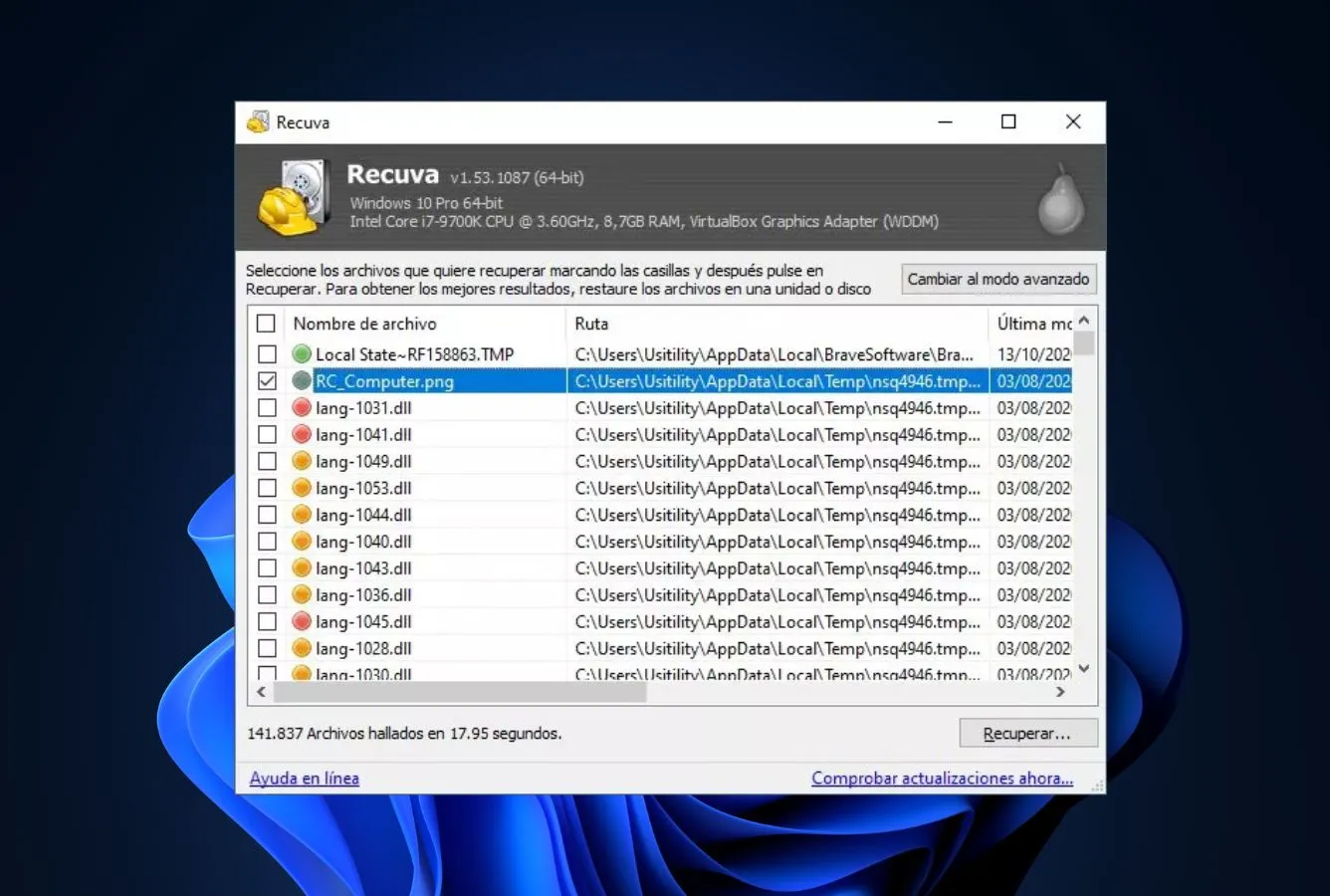
Recuva is the path of least resistance for a Windows user facing a simple SD card undelete. The free tier has no file-count cap, no size cap, and no watermark — three things most freemium competitors restrict in some way. Its standout feature is the recovery-chance rating that appears next to every found file: green means the file is likely intact, yellow means partial, red means the space has already been reused. Community feedback on Reddit and Trustpilot is consistently positive for the straightforward scenarios — a camera card where shots were deleted last week, a microSD where photos disappeared after a card swap — and consistently frustrated when the scenario gets more complex, like a RAW card or a RAW-format camera file from a newer mirrorless body.
- Unlimited free recovery — no size cap, no file cap, no watermark on restored files
- Recovery-chance indicator on every found file, so you know what’s worth restoring before you start
- Wizard mode walks non-technical users through the scan in under a minute
- Deep Scan mode catches files that the quick scan misses on formatted cards
- Portable version available — runs from a USB stick without installation touching the card
- Windows only — no macOS or Linux build exists and none is planned
- Weakens noticeably on proprietary RAW formats from newer mirrorless bodies (Canon R5, Sony A7R V)
- Deep Scan is slow on 128GB+ cards, and there’s no resumable-session feature if you need to stop
Excellent on recently deleted standard formats; less sure-footed on edge cases.
Independent testing places Recuva at roughly 80–85% recovered-file success on standard JPG/MP4/MOV/AVI on SD cards when files were deleted within the last few sessions. It handles quick-formatted cards adequately via Deep Scan, but loses ground sharply on cards with file system corruption or RAW signatures from newer camera bodies. Community signal on r/photography suggests it is reliable for amateur shoots and unreliable for high-end mirrorless workflows.
A wizard that actually respects your time.
The wizard opens with four questions — card location, file type, deep scan or quick, confirm — and scans from there. Results arrive in a sortable list with the recovery-chance indicator front and center. Preview works for images. The advanced view exposes scan-by-filename, include-hidden-files, and secure-delete toggles for users who want them but doesn’t force them on anyone. For simple SD card undelete, it is the most frictionless tool in this ranking.
The paid tier exists but it’s unnecessary for SD card use.
Recuva Professional adds virtual hard drive support, automatic updates, and premium support for $19.95/year — none of which matters for SD card recovery. The free tier is the feature-complete tier for this use case. The one caveat is the CCleaner bundle prompt in the installer; decline it during install unless you actually want CCleaner. For Windows users facing a straightforward deleted-photos scenario, Recuva’s free tier is the fastest, cleanest path to results on this list.

4. DMDE Free Edition – Deepest Low-Level Scanner
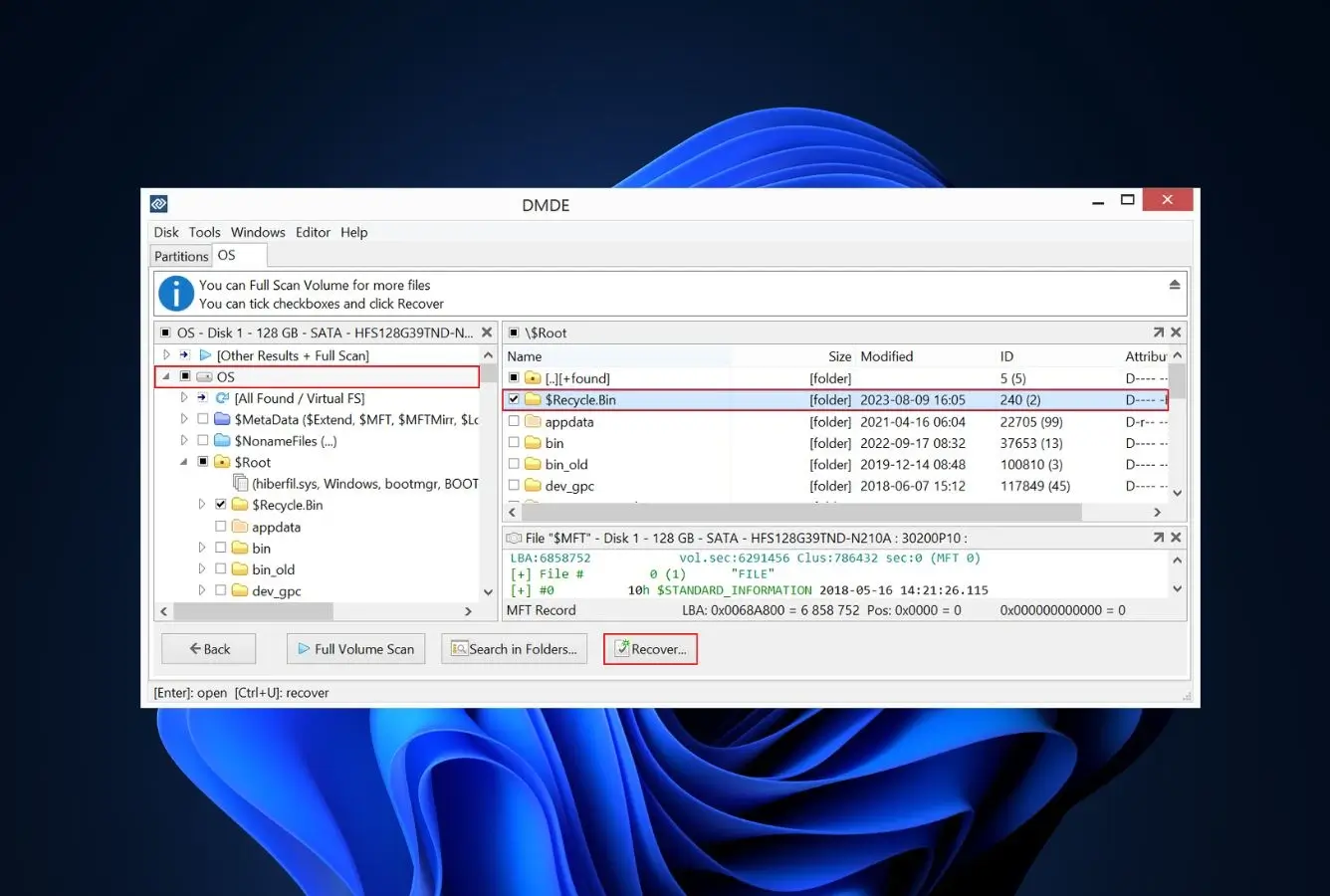
DMDE is what you reach for when the friendlier tools have given up. Its free edition caps recovery at 4,000 files per directory — which is enough for almost any single SD card, since SD cards rarely hold more than a few thousand files per folder — and it imposes no file-size limit, so you can pull 64GB of RAW video off a card without hitting a ceiling. Community feedback on r/datarecovery and the DMDE support forum describes a consistent pattern: users try three or four nicer-looking tools first, fail, try DMDE, recover the data. The interface looks intimidating (hex-editor pane, raw partition view, cryptic menus), but for corrupted cards, RAW partitions, and cases where the file system is unreadable, it outperforms most paid competitors in the same scenarios.
- 4,000-files-per-directory cap is effectively unlimited for most real SD card layouts
- No file-size limit — can recover a single 40GB 8K video file in the free edition
- Cross-platform down to DOS, with native binaries for Intel and Apple Silicon Macs
- Low-level sector view reveals the full state of the card, including hidden or corrupted partitions
- One-time paid license from $20 if you need the higher caps — no subscription, ever
- Interface drops you into a file-system-and-hex view with minimal hand-holding
- No preview thumbnails — you have to recover files blind and verify after the fact
- Documentation is thorough but terse; expect to keep a browser tab open to the user guide
Probably the most capable free tool for corrupted and RAW SD cards.
DMDE reads cards at the sector level and reconstructs directory structures from file-system metadata that other tools can’t parse. Community reports describe successful recoveries from cards that show up as RAW in Windows or refuse to mount in macOS, including cards where EaseUS and Disk Drill had already failed. Its partition-table reconstruction overlaps with TestDisk’s capabilities, and its file-carving for unstructured data overlaps with PhotoRec’s — which is why it punches above its weight at the free tier.
Looks like 2005 and acts like it too.
DMDE opens to a device-selection dialog, moves into a split view with hex data on one side and directory structure on the other, and expects you to know what you’re looking for. There is no wizard. There is no preview. The menus are accurate but unfriendly. Users who stick with it for thirty minutes usually figure it out; users who expect EaseUS or Recuva bounce off immediately. Community guides on the DMDE forum are genuinely helpful once you find them.
Free tier covers most SD card scenarios; paid license is a one-time $20.
The 4,000-files-per-directory cap rarely bites on SD cards — most cameras create one DCIM subfolder with a few hundred files per session. The paid editions ($20 Standard, $48 Professional, $133 Business) remove the cap and add features like RAID support and batch recovery, but for SD card use the free edition is typically enough. The one-time pricing is refreshing compared to every subscription-based competitor in this list.

5. DiskDigger – Unlimited Photo Recovery with a Catch
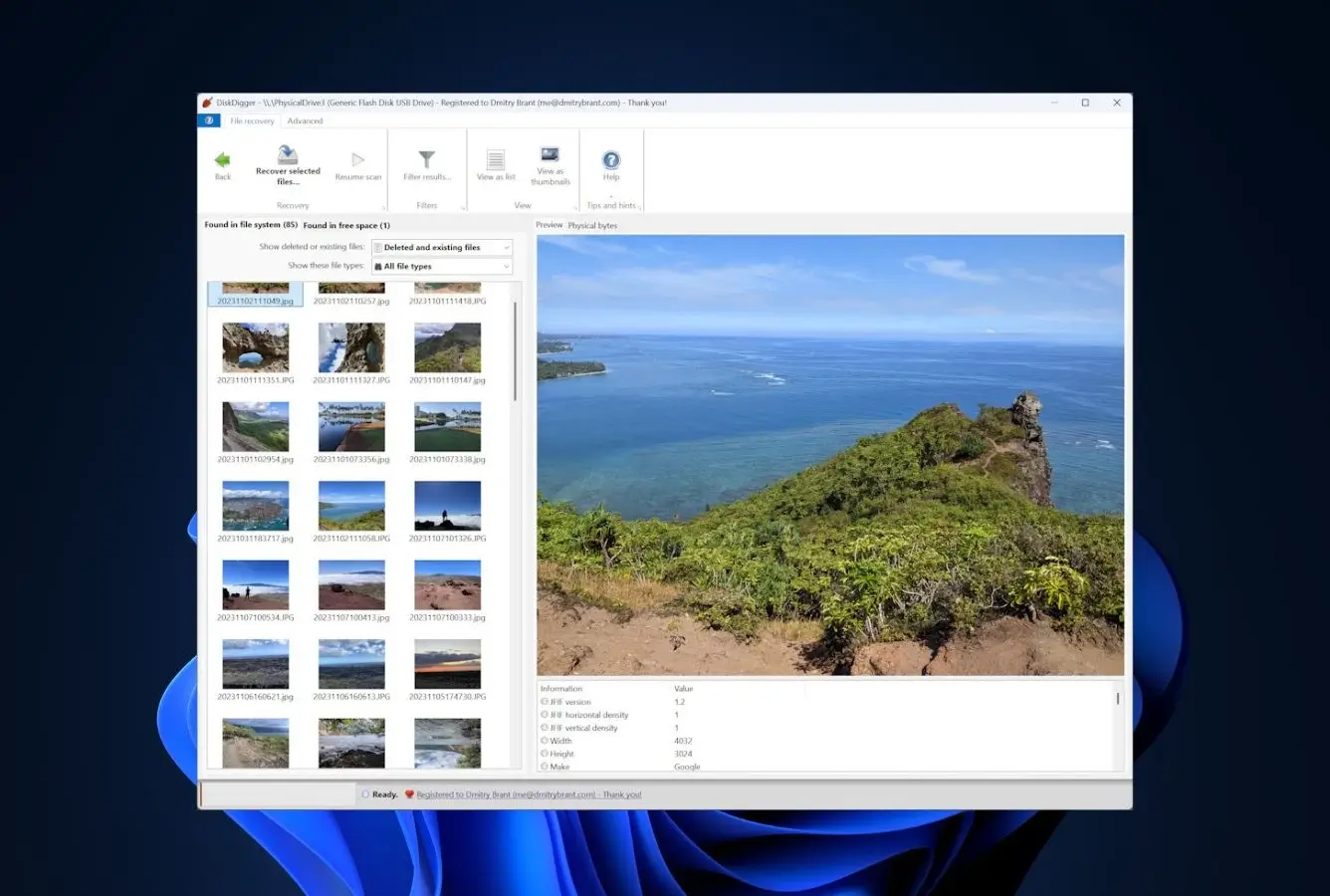
DiskDigger occupies an unusual middle ground. The Windows free build imposes no file-count or file-size limit, but inserts a five-second delay between each file save — which is trivial for ten photos and excruciating for ten thousand. Two scan modes run the software: “Dig Deep” reads the file system for deleted file pointers, and “Dig Deeper” does signature-based carving similar to PhotoRec. The signature database is narrower than PhotoRec’s but focuses tightly on media formats — JPG, CR2, NEF, ARW, MP4, MOV — which is exactly what you want for SD card recovery. Independent testing places DiskDigger in the upper-middle of the free tier on photo-specific recovery, and community feedback on photography forums skews positive for single-incident recoveries where the save-delay is a minor annoyance.
- No file-count or size limit in the free tier — only a 5-second save delay between files
- Thumbnail preview of recovered photos in real time during the scan, unlike PhotoRec
- Media-focused signature set — JPG, CR2, NEF, ARW, MP4, MOV, 3GP — matches SD card workloads
- Lightweight installer and minimal RAM footprint, runs well on older laptops
- Paid license is a one-time $14.99 if you want the delay removed permanently
- 5-second save delay turns a 2,000-photo recovery into nearly three hours of sitting there
- No official Mac build — Windows and Linux only (a separate DiskDigger Android app exists)
- Deep scan signatures are narrower than PhotoRec’s on non-media file types like documents
Very good on photos and video, weaker on general-purpose file recovery.
DiskDigger’s author built it as a photo recovery tool first, which shows in the signature coverage: mainstream RAW formats are handled well, JPEG fragmentation gets reassembled sensibly, and MP4/MOV carving works on non-fragmented files. It’s weaker than PhotoRec on document and archive recovery, and weaker than DMDE on severely corrupted cards. For an SD card that contains mostly photos and video — which is most SD cards — the recovery hit-rate is close to the top tier.
A sensible GUI that sits between Recuva’s wizard and DMDE’s hex view.
DiskDigger opens to a drive picker, offers the two scan modes with brief explanations, and displays results as thumbnails as soon as they’re found. You can preview, select, and save files during the scan instead of waiting for it to finish. The save dialog is where the delay hits; you pick files, click recover, and each file saves with a 5-second pause in the free edition. A counter shows how many files remain, which is either reassuring or demoralizing depending on the total.
The cheapest commercial tier in this list if you need to remove the delay.
The $14.99 personal license is a one-time purchase, not a subscription, and it removes the save delay entirely. That’s the cheapest paid tier of any tool in this ranking, and for a one-off recovery of a few thousand photos it’s genuinely reasonable. Free is still the right tier for small recoveries; paid is the right tier if you’re recovering hundreds of photos and value your afternoon more than fifteen dollars.
6. TestDisk – Partition Repair for RAW SD Cards
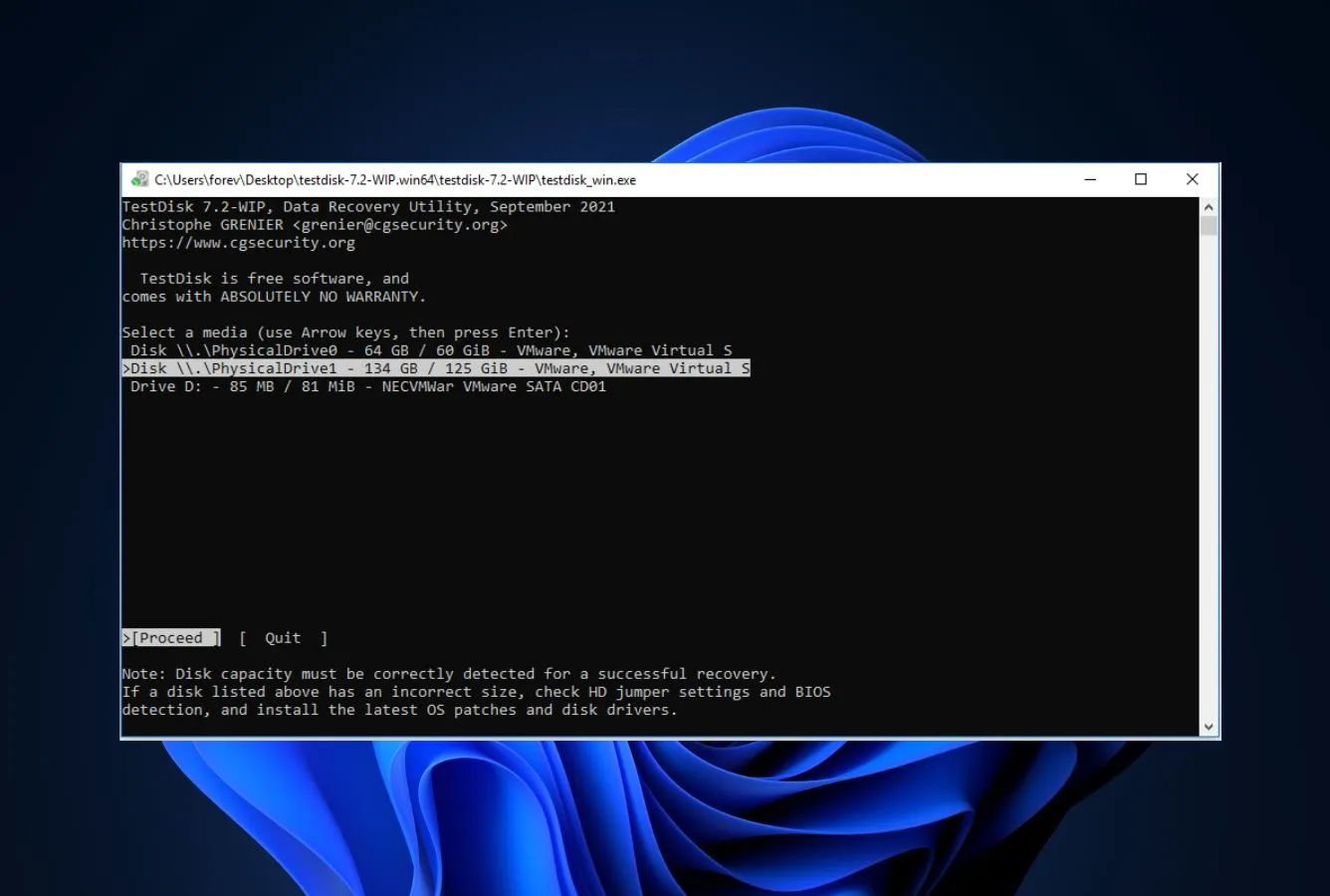
TestDisk is PhotoRec’s companion utility from the same author, and it solves a specifically different problem: rebuilding damaged partition tables and boot sectors on cards that have gone RAW or show 0 bytes in Windows. When an SD card appears in Disk Management but refuses to mount because its partition table is corrupted, TestDisk can often reconstruct the table from backup copies the file system leaves scattered across the card. The net effect, when it works, is that the card starts mounting normally again and all the files come back in place — no separate recovery step needed. This makes it a complementary tool rather than a competitor to PhotoRec: use TestDisk first when the card is RAW, and if the partition reconstruction works, you may not need PhotoRec at all.
- Can restore a RAW or unmountable SD card to working state without per-file recovery
- Rebuilds FAT32, exFAT, NTFS boot sectors and partition tables from backup copies on the card
- GPL v2+ open source, actively maintained, and bundled alongside PhotoRec in most distributions
- Cross-platform down to BSD, with current Apple Silicon builds via Homebrew
- Safe by default — TestDisk asks for confirmation before writing any partition changes to the card
- Same text-mode UI as PhotoRec; the learning curve is real
- Not a recovery tool — it fixes partitions, so it’s the wrong tool if partitions are fine but files are deleted
- A wrong partition-table write on a physically damaged card can worsen the damage
The right tool for a specific class of SD card failure, and wrong for every other class.
TestDisk’s strength is partition-table reconstruction, not file recovery. Independent testing shows it successfully reconstructs partition structures on the majority of RAW/unmountable SD cards where the underlying flash is still readable. When that reconstruction succeeds, every file on the card becomes accessible again without any recovery workflow. When it fails or the card’s physical controller has issues, TestDisk can’t help — move to PhotoRec or DMDE for signature-based carving instead.
Identical UX philosophy to PhotoRec — and identical tradeoffs.
TestDisk launches in a terminal window with arrow-key navigation through partition tables and filesystem structures. The workflow is select-device → analyze → deeper search → list found partitions → write table. The CGSecurity wiki is the manual; plan on reading it. For users who’ve used PhotoRec, TestDisk feels immediately familiar; for everyone else it’s a wall.
Free forever under GPL v2+, donations optional.
Same license and distribution model as PhotoRec. Bundled binaries include both tools together, so once you’ve set up PhotoRec on a machine you already have TestDisk. For the narrow use case of RAW or unmountable SD cards where the physical card still works, TestDisk is either the cheapest way to fix the problem (free) or a waste of time (if the card is physically dead). Its value is entirely about recognizing when to reach for it.

7. Disk Drill Free – Camera Video Fragment Recovery
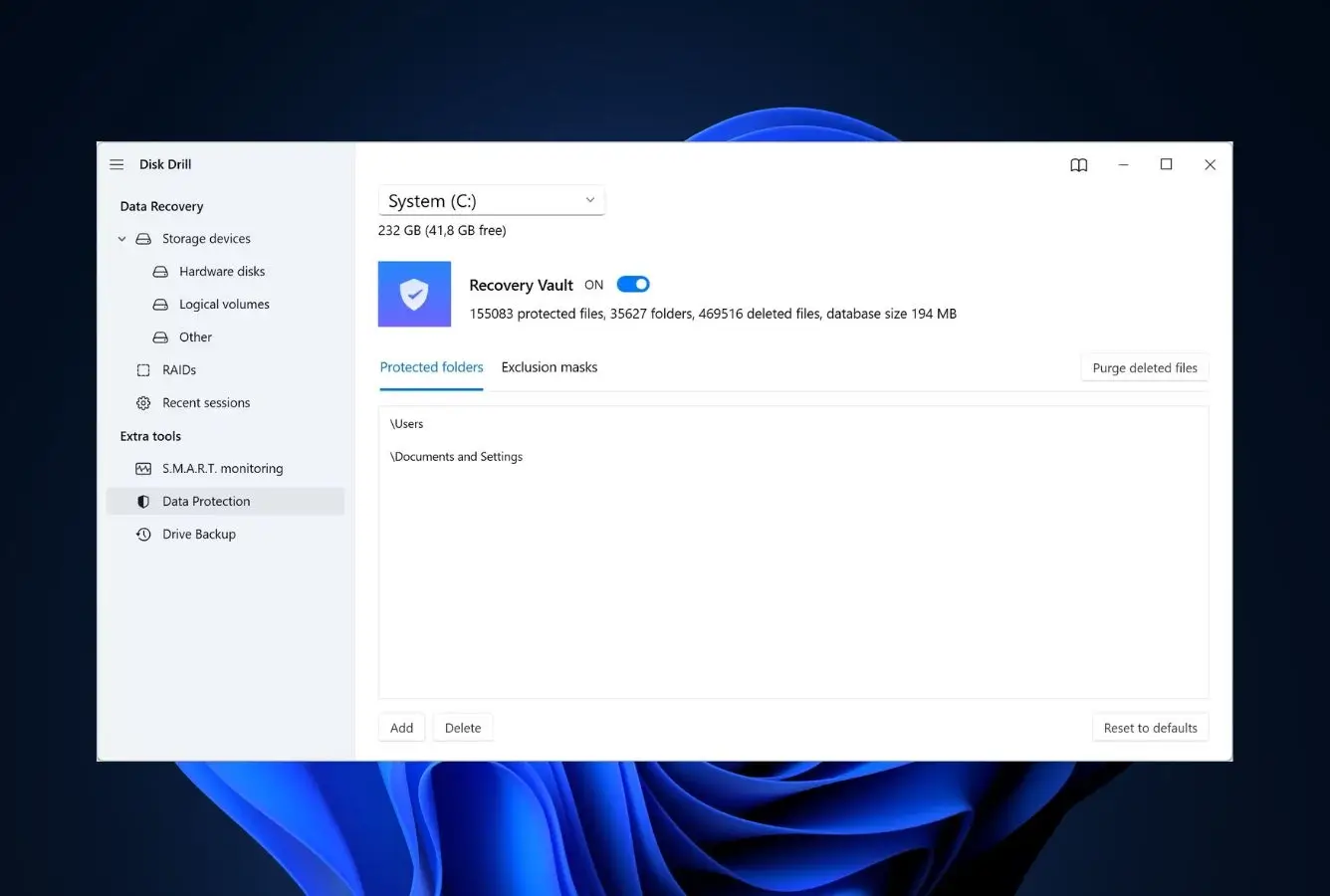
Disk Drill Free sits lower in this ranking than it does in paid roundups for a straightforward reason: the free tier is restrictive. Windows users get 100MB of actual recovery; Mac users get zero — just scanning and preview. That’s enough to prove the software works on your card, which is the point CleverFiles is making, but it’s not enough to solve most real SD card recoveries. What keeps Disk Drill on this list is the Advanced Camera Recovery module that reassembles fragmented video files from GoPro, DJI, Canon, Insta360, and similar cameras — a feature no other free tool here has — plus the free Clever Online Video Repair tool, which fixes corrupted MP4/MOV files separately from recovery. Independent testing places Disk Drill’s recovery engine near the top of the category on fragmented video specifically, even before you consider the 100MB cap.
- Advanced Camera Recovery reassembles fragmented GoPro/DJI/Canon/Insta360 video — unique in the free tier
- Free Clever Online Video Repair for corrupted MP4/MOV files, separate from the recovery flow
- Unlimited file previews on both Windows and Mac before any recovery quota is consumed
- Cleanest, most modern UI in the category — first-time users are productive in minutes
- Supports every SD card filesystem — FAT16, FAT32, exFAT, NTFS, HFS+, APFS, ext2/3/4
- 100MB free cap on Windows is tight — barely a few 4K clips or a single RAW burst
- Mac free tier is scan-and-preview only; no free recovery at all
- Pro license ($89 one-time) is reasonable but still the priciest per-device option in this ranking
Top-tier engine, artificially constrained by the free cap.
Independent testing and community feedback both place Disk Drill’s scanner near the top of the category on mixed-format SD card scenarios, with particularly strong results on fragmented camera video that tools without reassembly logic produce as broken, unplayable files. The free version runs the full scanner — not a stripped-down version — so you can see exactly what’s recoverable. The constraint is the 100MB you’re allowed to actually save.
Sets the bar the rest of the category gets measured against.
Disk Drill’s interface is the reference implementation of what consumer-grade recovery software should look like in 2026: large device tiles, a single scan button, a live results list with thumbnails as files are found, and a filter panel that groups by type, date, size, and recovery confidence. Preview works for images, video, and documents. The Mac and Windows builds share the same UX rather than feeling like separate products, which is rare in this category.
A 100MB tease, and a $89 one-time upgrade that’s actually fairly priced.
The free tier is best treated as a diagnostic — run it, see what’s recoverable, decide from there. The Pro license runs $89 as a one-time payment (not a subscription) with lifetime updates, which is a materially better long-term deal than EaseUS’s $69.95/year or Recoverit’s subscription tiers. For SD card use specifically, the free 100MB is often insufficient; for everything else (internal drives, external drives, RAID, NAS), the paid tier is competitive with the category.

8. Wondershare Recoverit Free – Fragmented Video Restoration
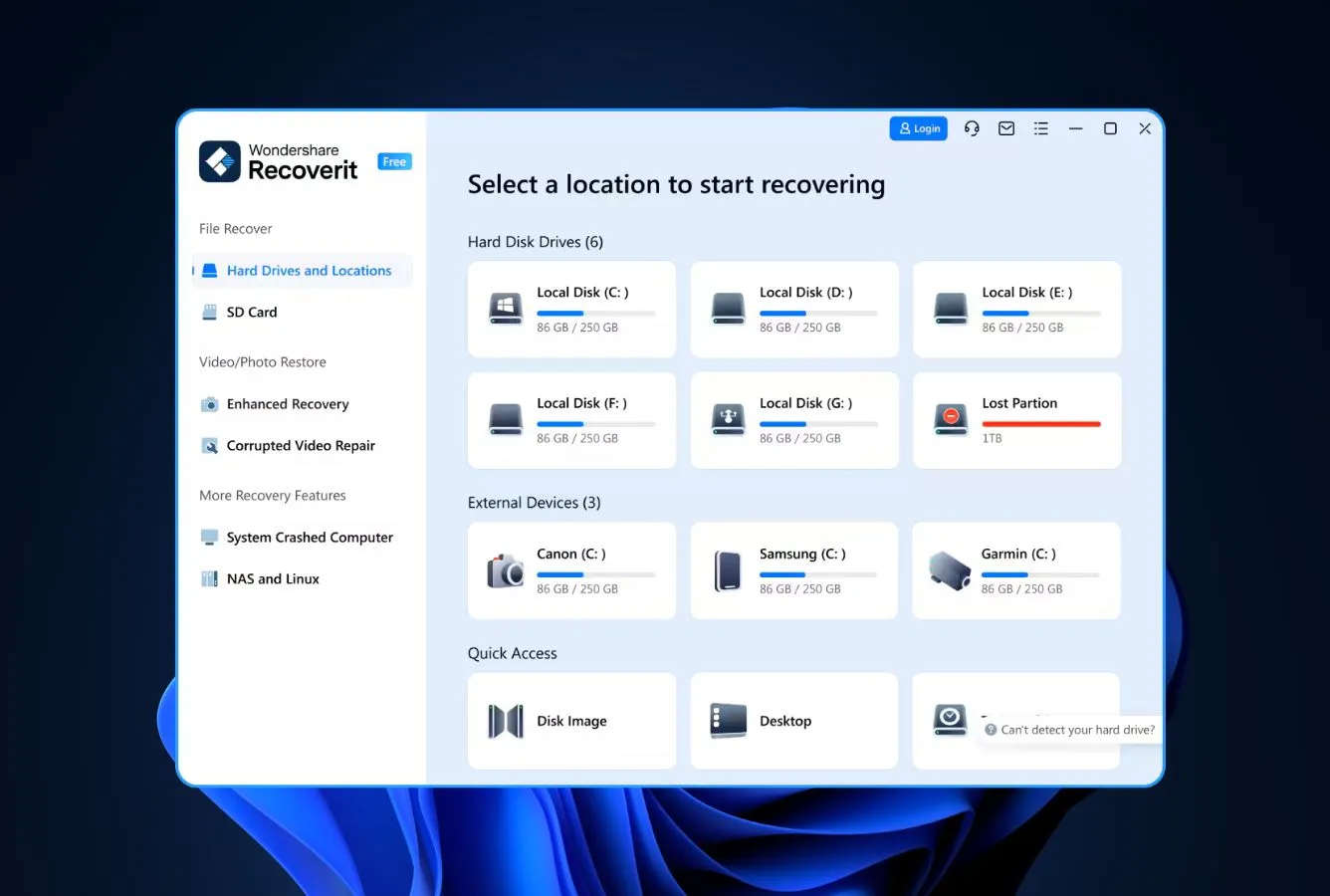
Wondershare Recoverit Free closes the ranking in eighth because its 100MB free cap mirrors Disk Drill’s without the Advanced Camera Recovery advantage — but it earns its place because its Enhanced Video Recovery feature specifically targets fragmented video files from SD cards, a real pain point for action-cam and drone users. The free tier runs the full scanner, previews results, and lets you confirm the software found your footage before any upgrade decision. Community feedback on the Wondershare forum and r/datarecovery is mixed: reliable for straightforward scenarios, hit-or-miss on severely damaged cards, and the subscription upgrade path has drawn complaints around auto-renewal defaults that users didn’t notice at checkout.
- Enhanced Video Recovery reassembles fragmented clips from drones, action cams, and mirrorless bodies
- Clean, modern UI that matches Wondershare’s broader product family
- Unlimited preview before the 100MB free recovery quota is used
- Broad file-system coverage — FAT16, FAT32, exFAT, NTFS, APFS, HFS+
- Native Apple Silicon and Intel Mac builds, plus current Windows build
- 100MB free cap is the same as Disk Drill without Disk Drill’s Advanced Camera Recovery
- Subscription pricing starts at $59.99/year with auto-renewal on by default
- Trustpilot and community threads flag billing friction on cancellation more often than competitors
Very good on video, average on photos and documents.
Recoverit’s Enhanced Video Recovery is genuinely differentiating — the algorithm that reassembles fragmented MP4/MOV/MXF clips is competitive with Disk Drill’s Advanced Camera Recovery and better than every other tool in this ranking for that specific scenario. Outside of video, results are solid but unexceptional; the scanner handles FAT32/exFAT deleted and formatted cards comparably to EaseUS and Recuva, without standing out. Independent testing suggests the strengths and weaknesses align closely with Disk Drill’s, which makes the lower ranking partly about redundancy.
Polished and predictable, with an upgrade nag that’s a shade too frequent.
The three-step flow (select location → scan → preview and recover) is virtually identical to EaseUS and Disk Drill, which isn’t a criticism — it’s a converged category pattern. Where Recoverit diverges slightly is the upgrade prompt frequency: the 100MB quota shows a banner, and the “upgrade to unlock” call-to-action appears more aggressively than in Disk Drill or EaseUS. For a one-time user that’s annoying but tolerable; for repeated use, it wears on patience.
100MB free, then a subscription ladder that asks you to commit annually.
Paid tiers start at $59.99/year and climb to perpetual licenses at higher price points. The subscription defaults to auto-renewal, and Trustpilot complaints specifically flag cancellation friction as the most common billing issue — worth noting if you subscribe. For most SD card recoveries the 100MB free tier serves as proof-of-concept; if the scan shows your clips are recoverable, Disk Drill’s $89 one-time license is generally the better commercial alternative.
How We Evaluate the Best Free SD Card Recovery Software
Ranking free SD card recovery tools is easy to get wrong. Vendor marketing pages all promise the same things (high recovery rates, generous free tiers, wide file-system support), and a single bad benchmark on an unrepresentative test card could mislead anyone reading this guide. Our approach aggregates three layers of evidence: vendor documentation for feature baselines, independent third-party testing for cross-referenced recovery outcomes, and community signal from Reddit, Trustpilot, and photography forums for real-world user behavior. Nothing here is based on a single in-house test run — rankings reflect patterns consistent across all three sources.
Platforms covered: Windows 10 and 11 (24H2), macOS 11 Big Sur through 15 Sequoia on both Intel and Apple Silicon, plus Linux where the tool supports it. Card types covered: standard SD, microSD, SDHC, SDXC, and CF cards on FAT32 and exFAT file systems (the two formats every camera and phone writes to by default). Key factors weighted: recovery capability on SD-relevant file systems (40%), usability for non-technical users (20%), safety and trust (15%), extra features like video repair or camera fragment reassembly (15%), platform parity between Windows and Mac (5%), and free-tier practical value (5%).
Individual test runs, scan-time logs, and per-tool notes from our ongoing research live on our full methodology page. Start there if you want the underlying evidence behind any ranking on this page.
Best Free SD Card Recovery – Honorable Mentions
Six tools we evaluated but didn’t include in the main ranking. Each has a niche strength or a specific flaw — usually around free-tier tightness, platform gaps, or category overlap — that kept it out of the top eight.
How to Choose the Best Free SD Card Recovery Software
Before downloading anything, stop using the SD card. Every photo you take or file you save after a loss risks overwriting the data you’re trying to recover, and the flash controller may do housekeeping of its own in the background. Pull the card, set it aside, and pick a tool based on the scenario below — not on the first ad result or the first tool a forum suggests.
File System Compatibility (FAT32 and exFAT Matter)
Almost every consumer SD card ships formatted as FAT32 (smaller cards) or exFAT (cards larger than 32GB). Any tool that claims SD card support must handle both. NTFS support is nice-to-have but rarely relevant; HFS+ and APFS matter only if you deliberately reformatted the card for Mac use. If you’re not sure which file system your card uses, check it in Windows Disk Management or macOS Disk Utility before choosing a tool. Users researching related categories may also want to see our best SD card recovery software guide for paid alternatives.
Free-Tier Ceiling vs What You Actually Need
Free tiers range from scan-only (Disk Drill on Mac) through 100MB (Disk Drill Windows, Recoverit) to 2GB (EaseUS with social share) to unlimited (PhotoRec, TestDisk, Recuva, DMDE with the 4,000-files-per-directory caveat). Match the tier to the size of your loss: a handful of deleted JPEGs fits in any tier; a full day’s RAW and 4K clips needs PhotoRec or EaseUS; a full card of 4K video needs PhotoRec, DMDE, or TestDisk.
Deep Scan vs Quick Scan — When to Use Which
Quick scan reads the file system’s index for entries marked deleted. It’s fast (seconds to minutes) and works for recent deletes on a card that still mounts. Deep scan scans sectors for file signatures and rebuilds files without relying on the index. It’s slow (10–60 minutes on a 64GB card), but it’s the only option for formatted, RAW, or corrupted cards. Start with a quick scan; move to deep scan if the quick scan returns nothing useful.
Preview Before Recovery
Every tool in the top eight supports file preview except TestDisk (which doesn’t need it — it fixes partitions) and PhotoRec (text-mode limitation). For freemium tools with tight recovery caps, preview is how you decide which files to spend your free quota on. If a tool offers unlimited preview but limited recovery, use the preview to confirm your important files are recoverable before spending the cap.
Platform Support (Windows, Mac, or Both)
Recuva and DiskDigger are Windows-only. EaseUS, Disk Drill, Recoverit, PhotoRec, TestDisk, and DMDE are cross-platform, though Disk Drill’s Mac free tier is scan-only. Mac users have meaningfully fewer free options, which is why PhotoRec and EaseUS Free are disproportionately valuable on that platform. For a broader platform view beyond SD cards, our free Windows data recovery guide covers internal drives and broader use cases.
Portable Install and Session Management
Install recovery software to the SD card you’re recovering from is a common mistake that overwrites the data you’re trying to save. Recuva has a portable build that runs from a USB stick; PhotoRec and TestDisk are natively portable; DMDE has a portable ZIP option. Always install the recovery tool to a different drive than the one you’re recovering. Session management — being able to save scan state and resume later — is rare in the free tier; Disk Drill Pro has it, but DMDE is the most forgiving free option for interrupted scans.
When Free Recovery Software Can’t Save Your Card
Recovery software works on the underlying flash storage through the card’s own controller. If the controller is damaged, or the flash has been overwritten, or the card was securely formatted, no amount of software will produce results. Match your scenario against the table below before spending hours on scans that can’t succeed.
| Your situation | Software can help? | What to do instead |
|---|---|---|
| Card physically snapped or cracked PCB | No | Professional cleanroom service or replacement |
| Card doesn’t appear in Disk Management at all | No | Try a different card reader first; then cleanroom service |
| Deleted or quick-formatted card, still mounts | Yes | EaseUS Free, PhotoRec, or Recuva |
| Card shows as RAW or asks to reformat | Yes | TestDisk first; PhotoRec or DMDE if partition repair fails |
| Card was securely/fully formatted (not quick) | No | Data is overwritten at sector level — not recoverable |
Physical Damage (Cracked, Burned, Snapped, Water-Immersed)
A card that’s been physically broken, exposed to sustained heat or fire, or immersed in water long enough for the PCB to corrode is outside the reach of software. If the card doesn’t appear in Disk Management or Disk Utility as a readable device, the controller or flash chips have been damaged. At this point only a cleanroom service with the right donor parts can extract data, and even that is not guaranteed. Do not apply DIY repairs like freezing, heating, or swapping the card case — these tricks damage controllers on modern cards and eliminate any chance of professional recovery.
Secure / Full Format (Not Quick Format)
A full format writes zeros to every sector on the card, overwriting any deleted data beneath the file system. Windows offers “quick format” by default, which only clears the file table — data is recoverable in that case. But if you deliberately unchecked quick format, or if your camera uses SD_ERASE with CMD38 on format, every sector is overwritten and recovery is impossible. Cards formatted in camera bodies that support these commands (newer Canon, Sony, and Panasonic mirrorless) are particularly at risk.
Sustained Writes After Data Loss
Every new photo, video, or file written to an SD card after a loss increases the chance that your deleted data has been overwritten. Modern cards distribute writes across flash cells using wear leveling, so the damage isn’t always where you’d expect. If you’ve used the card for even a few minutes since the loss, recovery is still possible but less complete. Stop using the card immediately — every minute counts.
Controller Firmware Failure
SD cards have small controller chips that translate between your computer and the raw flash. When the controller firmware fails — rare but not unheard of, particularly on cheap or counterfeit cards — the card may show the wrong size, refuse to mount, or return errors at random. Software can’t talk to flash that the controller won’t expose. This is a professional recovery scenario; dedicated labs have tools to read flash chips directly.
TRIM-Like Behavior on Newer Cards
Most SD cards don’t implement TRIM, but the premium “SD Express” cards, some microSDXC cards used in phones, and cards using eMMC-style controllers can behave similarly — deleted data gets marked for flash erasure almost immediately and may be unrecoverable within minutes of deletion. This is the exception, not the rule, for standard SD cards in cameras. If you’re recovering from an SD card in an Android phone, act especially fast. Our SSD data recovery guide covers TRIM-related challenges in more depth.
Don’t take “just one more photo to test” — that photo can overwrite the one you’re trying to recover. Pull the card, set it aside, and scan on a computer using the card as a read-only source.
Built-in SD Card Recovery Options (Check These First)
Before downloading any recovery tool, check whether the files you think are lost are actually somewhere obvious. Cameras, phones, and computers cache photos in unexpected places, and a few minutes spent checking built-in options can save a full scan.
Camera-Side Protection and Backup Folders
Many mirrorless and DSLR bodies copy thumbnails or full-resolution backups to a secondary .THMBNL or backup directory on the card, separate from the main DCIM folder. Canon, Nikon, and Sony cameras have done this under various names for years. Check every folder on the card before assuming anything is lost — sometimes the “missing” photos are sitting in a hidden folder the camera created. Cameras with dual card slots also sometimes write a safety backup to the second card that users forget about.
Phone Trash and Cloud Sync
If the SD card was in an Android phone, check the phone’s Photos app trash (Google Photos keeps deleted items for 30 days) and its cloud backup. Many users discover their “lost” photos sitting in Google Photos or Samsung Cloud the entire time. Similarly, if the card was used with a computer that had OneDrive, iCloud Drive, or Google Drive running a folder sync, check those services’ trash and version history before scanning the card.
Windows Recycle Bin (For PC-Side Deletes)
Files deleted from an SD card that was mounted in Windows sometimes end up in the Recycle Bin rather than being permanently removed, depending on the source of the delete. Check the Recycle Bin on every Windows PC the card was recently connected to before running a recovery scan. On macOS, check the Trash for similar reasons. If you find them there, drag them out — no recovery software needed. For broader Windows scenarios, our Recycle Bin recovery guide covers edge cases where the Bin has been emptied.
When Built-in Isn’t Enough
If the photos aren’t in any camera folder, cloud backup, or recycle bin, the data is genuinely on the SD card’s flash — deleted but not overwritten, or lost because the file system is damaged. That’s when you reach for the tools in the main ranking above. Start with EaseUS Free or Recuva for deleted files on a working card; move to PhotoRec or TestDisk if the card is RAW or formatted; move to professional service if the card is physically damaged or silently corrupted.
The fastest fix for SD card recovery is never needing it. Rotate between two cards per camera body, copy to your computer before reformatting, and your worst-case loss drops from “entire shoot” to “half a shoot.”
Final Verdict
EaseUS Data Recovery Wizard Free is the best free SD card recovery software in 2026. Its 2GB free ceiling is genuinely useful — enough for most real-world SD card losses involving JPEGs, documents, and a handful of 4K clips — and it pairs that capacity with the most polished interface in the freemium category. For a typical user who wants to plug in a card, click a button, and see thumbnails of their recoverable photos within two minutes, no other tool on this list compares.
Beyond the winner: PhotoRec is the answer when you have more than 2GB to recover and can tolerate a text-mode interface — it’s the only truly free option with unlimited capacity and top-tier results on formatted cards. Recuva covers Windows-only users facing simple deletes with zero quota and a wizard anyone can use. DMDE rescues scenarios where every other free tool has already given up — RAW cards, corrupted file systems, severely damaged partitions. And TestDisk is the niche specialist when a card is RAW but the underlying flash is still healthy — fix the partition, skip the recovery step entirely.
Frequently Asked Questions
About the Authors


Data Recovery Fix earns revenue through affiliate links on some product recommendations. This does not influence our rankings — all tools are evaluated independently based on documented research, independent testing from external sources, vendor documentation, and community feedback, before any affiliate relationships are considered. If anything on this page looks inaccurate, outdated, or worth revisiting, please reach out at contact@datarecoveryfix.com and we’ll review it promptly.