8 Best Data Rescue Alternatives – Quick Comparison
Eight ranked alternatives plus one greyed baseline row showing where Data Rescue 6 itself sits on each criterion. The “vs Data Rescue” column reflects editorial evaluation of how decisively each alternative addresses Data Rescue’s specific limitations – the steep $79 / 30-day or $399/yr Professional pricing with no lifetime tier, the dated 2024-era UI, the slow update cadence (no major version since August 2024), and the narrow Windows file system support. Not an in-house benchmark.
| Tool | vs Data Rescue | License Type | Platforms | Free Limit | Starting Price | Best For |
| Disk Drill |
Excellent |
Lifetime + sub |
Win + Mac (3 devices) |
500 MB |
$89 / yr · $149 lifetime |
Cross-platform license at lifetime price |
| EaseUS Data Recovery Wizard |
Excellent |
Lifetime + sub |
Win + Mac |
2 GB |
$99.95 / yr · $149.95 lifetime |
Wizard UX + broadest file systems |
| Stellar Data Recovery |
Very Good |
Annual sub |
Win + Mac |
1 GB |
$59.99 / yr Standard |
Cheapest annual w/ Mac edition |
| R-Studio |
Excellent |
Lifetime |
Win + Mac + Linux |
Files < 256 KB |
$79.99 lifetime |
RAID, technicians, forensic work |
| DMDE |
Very Good |
Lifetime + sub |
Win + Mac + Linux + DOS |
4,000 files / dir |
$20 / yr · $48 lifetime |
Free cross-platform power-user GUI |
| MiniTool Power Data Recovery |
Good |
Lifetime + sub |
Win + Mac |
1 GB |
$69 / yr · $89 lifetime |
Friendly wizard with 1 GB free |
| iBoysoft Data Recovery |
Good |
Lifetime + sub |
Win + Mac (separate) |
1 GB |
$69.95 / yr · $89.95 lifetime |
Mac-first APFS + encrypted volumes |
| Recuva |
Good |
Free or lifetime |
Windows only |
Unlimited (free) |
Free · $24.95 Pro |
Free wizard for Windows |
| Data Rescue 6 (baseline) |
|
30-day or annual sub |
Win + Mac |
1 GB |
$79 / 30 days · $399/yr |
Cross-platform license, FileIQ |
The greyed bottom row shows Data Rescue 6 itself as the baseline being compared against. Not a recommendation. All prices come from the vendors’ current product pages and reflect single-license tiers, with bundle discounts excluded.
8 Best Data Rescue Alternatives – In-Depth Reviews
1. Disk Drill – Best Overall Data Rescue Alternative
4.78
★★★★★
Cross-platform license at $149 lifetime versus Data Rescue Professional’s $399/yr subscription, plus a meaningfully more modern interface.
PlatformsWindows + macOS
Free trial500 MB (Win)
Devices3 per license
From$89 / yr
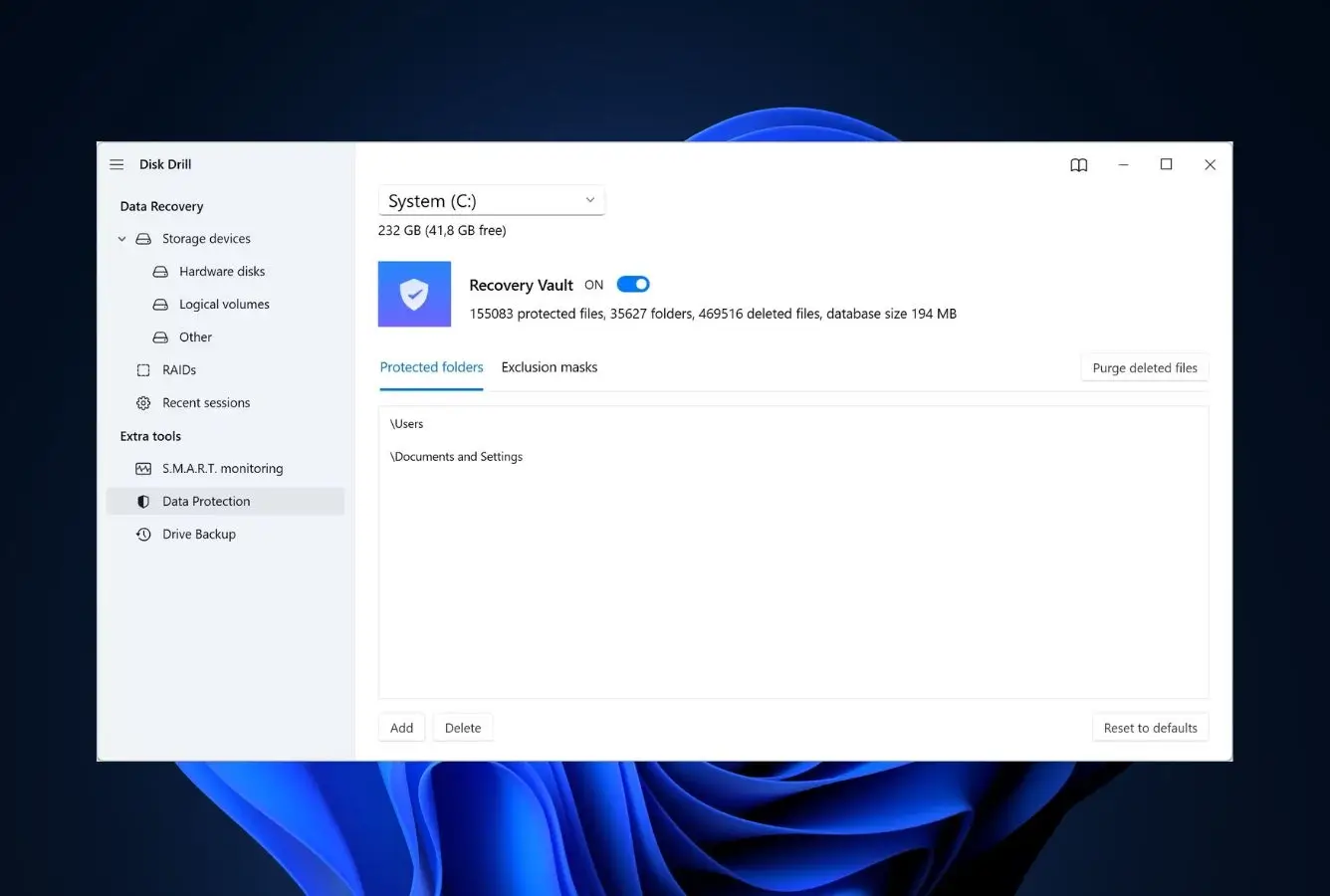
Disk Drill is the best overall Data Rescue alternative for users who want the same cross-platform license model (one purchase covers Windows and macOS) but without Data Rescue’s subscription pricing or 2024-era UI. CleverFiles built Disk Drill macOS-first and ported the engine to Windows, with a meaningfully more modern interface than Data Rescue’s, file preview during scanning, recovery-chance estimates next to each detected file, and selective recovery. The recovery engine handles APFS, HFS+, NTFS, FAT, exFAT, and ext4 with metadata-aware recovery (preserving original filenames and folder structure) plus a fallback signature-based mode for severely damaged drives. The lifetime PRO license covers Windows and macOS across three devices for $149, which works out to less than half the cost of a single year of Data Rescue Professional ($399/yr). Disk Drill also bundles capabilities Data Rescue does not match: byte-level disk imaging, S.M.A.R.T. monitoring, Recovery Vault metadata backups, and Advanced Camera Recovery for fragmented multimedia files.
✓ Pros
- $149 lifetime PRO covers Windows + macOS across 3 devices
- One license covers both platforms, matching Data Rescue’s key selling point
- Modern interface, contrasting with Data Rescue’s 2024-era UI
- File preview, recovery-chance estimates, selective recovery, S.M.A.R.T. monitoring
- Byte-level disk imaging and Recovery Vault metadata backups
- Advanced Camera Recovery for fragmented multimedia files
✕ Cons
- 500 MB Windows free trial vs Data Rescue’s 1 GB free preview
- No native RAID reconstruction or hex disk editor (Data Rescue Advanced has both)
- No FileIQ-equivalent for teaching the engine new file types
Recovery Power
Matches Data Rescue on healthy drives, ahead on Windows file system breadth.
For everyday recovery scenarios on healthy drives (deleted files, recently formatted volumes, accidentally emptied Recycle Bin or Trash), Disk Drill produces results comparable to Data Rescue 6, with file preview and recovery-chance estimates that Data Rescue’s Standard Mode doesn’t surface as cleanly. Where Disk Drill pulls ahead is on Windows file system support: Disk Drill reads NTFS, FAT, exFAT, and ext4 with full read/write recovery, while Data Rescue’s Windows build is limited to NTFS, FAT, exFAT (HFS+, APFS, ext are read-only). Disk Drill also adds Advanced Camera Recovery for fragmented multimedia files where Data Rescue’s engine sometimes returns broken output, and the byte-level disk imaging is more flexible than Data Rescue’s clone tool.
Interface & Experience
A meaningfully more modern interface than Data Rescue’s 2024-era UI.
The home screen is a drive list with friendly file-type icons and a single “Search for lost data” button, similar to Data Rescue’s Standard Mode but visually current with macOS Sequoia and Windows 11 design language rather than feeling like a port from 2018. Results group into category buckets (photos, video, audio, documents, archives) with inline preview on images and docs, a recoverability indicator beside each item, and checkboxes for picking exactly what to restore. The transition cost from Data Rescue is roughly fifteen minutes – the underlying mental model (drives, scans, results) translates directly, but the surface controls feel meaningfully more polished. Power features like sector-range scanning are surfaced in preferences rather than buried in an Advanced Mode toggle, which is a small but consistent UX advantage.
Price & Value
$149 lifetime versus Data Rescue’s $399/yr Professional, on the same cross-platform license model.
Disk Drill PRO is $89/yr or $149 lifetime, and the lifetime key activates on Windows and macOS across three devices – exactly the cross-platform license model that’s Data Rescue’s biggest selling point. The math is straightforward: $149 lifetime versus $399/yr means Disk Drill pays for itself versus Data Rescue Professional in less than half a year, and the device coverage is broader (3 devices versus Data Rescue’s single-PC limit per license). For users who just want short-term recovery for a specific job, Data Rescue’s $79 30-day Standard license still has a use case, but for any ongoing or repeat use, Disk Drill is the better unit-economics choice.
2. EaseUS Data Recovery Wizard – Best Wizard-Style Workflow
4.62
★★★★★
$149.95 lifetime versus Data Rescue’s $399/yr Professional, with the broadest file-system support and a 2 GB free tier.
PlatformsWindows + macOS
Free recovery2 GB
LicenseSub or lifetime
From$99.95 / yr
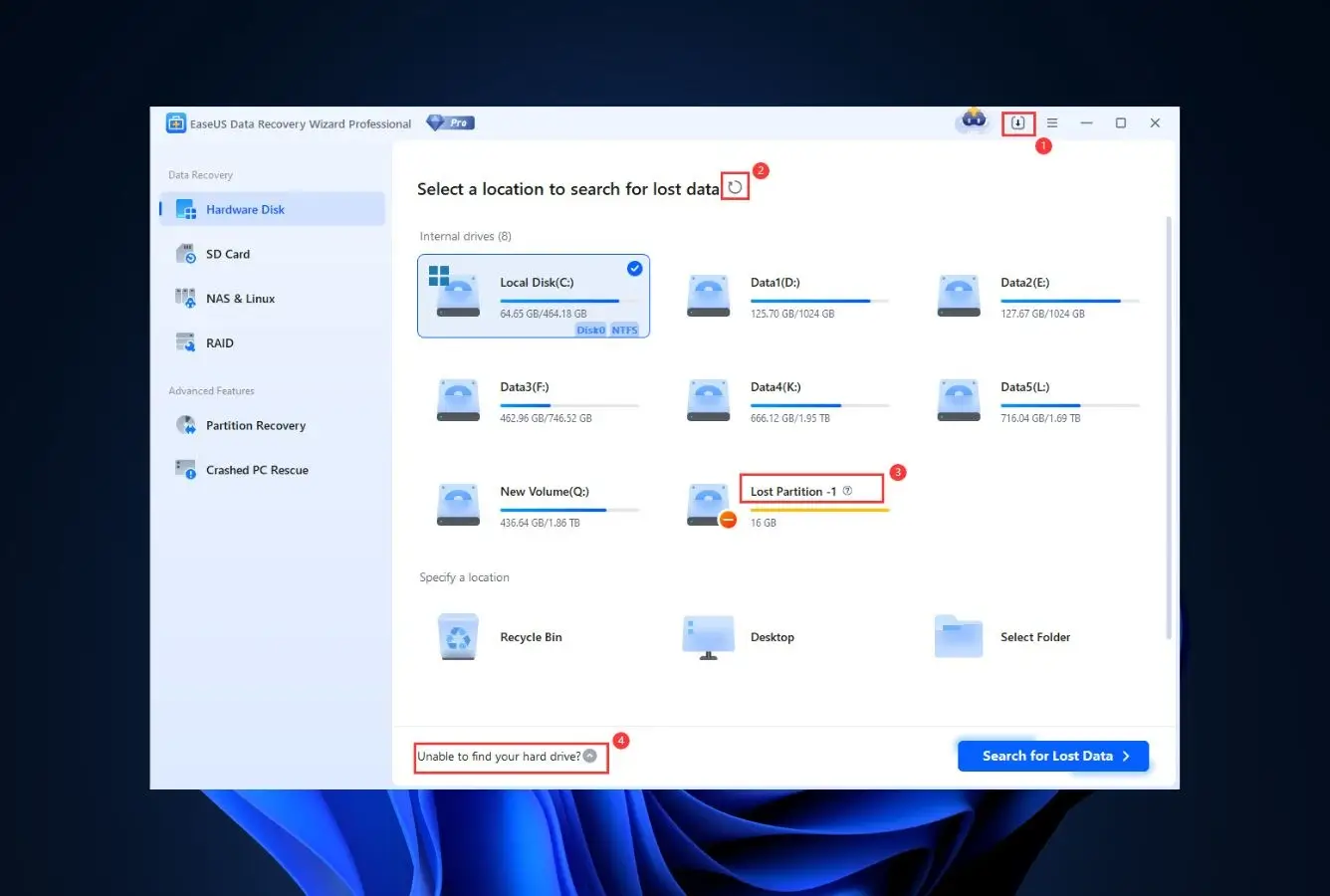
EaseUS Data Recovery Wizard is the right pick for users coming from Data Rescue who want a friendlier wizard-style workflow, broader file-system support, a higher free-tier cap, and a real lifetime license rather than Data Rescue’s subscription-only model. The interface is the most beginner-friendly wizard on this list: pick a drive, pick a scan mode, browse results in a tree view with file preview and recovery-chance estimates (good/poor/unrecoverable). Where Data Rescue requires the Advanced Mode toggle to expose anything beyond basic scan, EaseUS surfaces the same controls cleanly in its Standard interface. The recovery engine reads APFS, HFS+, exFAT, NTFS, FAT, and ReFS read/write, which is broader Windows file-system support than Data Rescue’s Windows build (NTFS, FAT, exFAT only, with HFS+ / APFS / ext as read-only). The 2 GB free recovery is double Data Rescue’s 1 GB free trial, and at $149.95 lifetime, EaseUS Pro costs less than half of one year of Data Rescue Professional ($399/yr).
✓ Pros
- The friendliest wizard UX of any tool on this list
- $149.95 lifetime is cheaper than one year of Data Rescue Professional
- 2 GB free recovery, double Data Rescue’s 1 GB free trial
- Broader Windows file-system support than Data Rescue’s Windows build
- Preserves original filenames and folder structure on healthy drives
✕ Cons
- Mac and Windows are sold as separate licenses, not one combined key like Data Rescue
- Engine depth on severely damaged drives is shallower than R-Studio or DMDE
- Single-PC license at base tier (Data Rescue’s license is also single-PC)
- Aggressive in-app upsells during free-tier scans
Recovery Power
Comparable to Data Rescue on healthy drives, ahead on Windows file-system breadth.
EaseUS reads APFS, HFS+, exFAT, NTFS, FAT, and ReFS through metadata-aware recovery on both Windows and Mac builds, with full read/write recovery. Data Rescue’s Mac build covers HFS+, APFS, FAT32, and exFAT well, but the Windows build is significantly narrower (NTFS, FAT, exFAT only, with HFS+ / APFS / ext as read-only). For Windows users specifically, EaseUS is the broader tool. On Mac, the engines are comparable, with Data Rescue’s FileIQ giving it a small edge for custom file types. Where R-Studio or DMDE pull ahead of both EaseUS and Data Rescue is on severely corrupted drives or RAID arrays.
Interface & Experience
A meaningfully more polished wizard than Data Rescue’s Standard Mode.
Data Rescue 6 ships with two interface modes (Standard and Advanced), with the Standard view stripped down for non-technical users. EaseUS’s wizard is more polished than Data Rescue’s Standard Mode without requiring a mode toggle to access scan options. The home screen presents a drive picker with friendly file-type filters, results appear in a tree view with file preview and recovery-chance indicators next to each file, and selective recovery is the default rather than an opt-in setting. For Data Rescue users whose primary objection is the dated UI, EaseUS offers the lowest-friction transition path on this list. The trade-off is that EaseUS does not expose the kind of advanced controls Data Rescue’s Advanced Mode does (FileIQ, virtual RAID, hex tables, allocation-block manipulation).
Price & Value
$149.95 lifetime is cheaper than one year of Data Rescue Professional.
EaseUS Data Recovery Wizard Pro is $99.95/yr or $149.95 lifetime. Data Rescue Professional is $399/yr, with no lifetime tier offered. The math is straightforward: even EaseUS’s most expensive option ($149.95 lifetime) is cheaper than half a year of Data Rescue Professional, and EaseUS’s annual ($99.95/yr) is a quarter of Data Rescue’s. For users who only need short-term recovery, Data Rescue’s $79 30-day Standard license still has a use case, but for any ongoing or repeat use, EaseUS is meaningfully better unit economics. The 2 GB free tier is double Data Rescue’s 1 GB, which softens the upgrade decision further.
3. Stellar Data Recovery – Best Modern UI Replacement
4.48
★★★★½
A modern wizard interface that contrasts sharply with Data Rescue’s 2024-era UI, at $59.99/yr Standard.
PlatformsWindows + macOS
Free recovery1 GB
LicenseAnnual sub
From$59.99 / yr
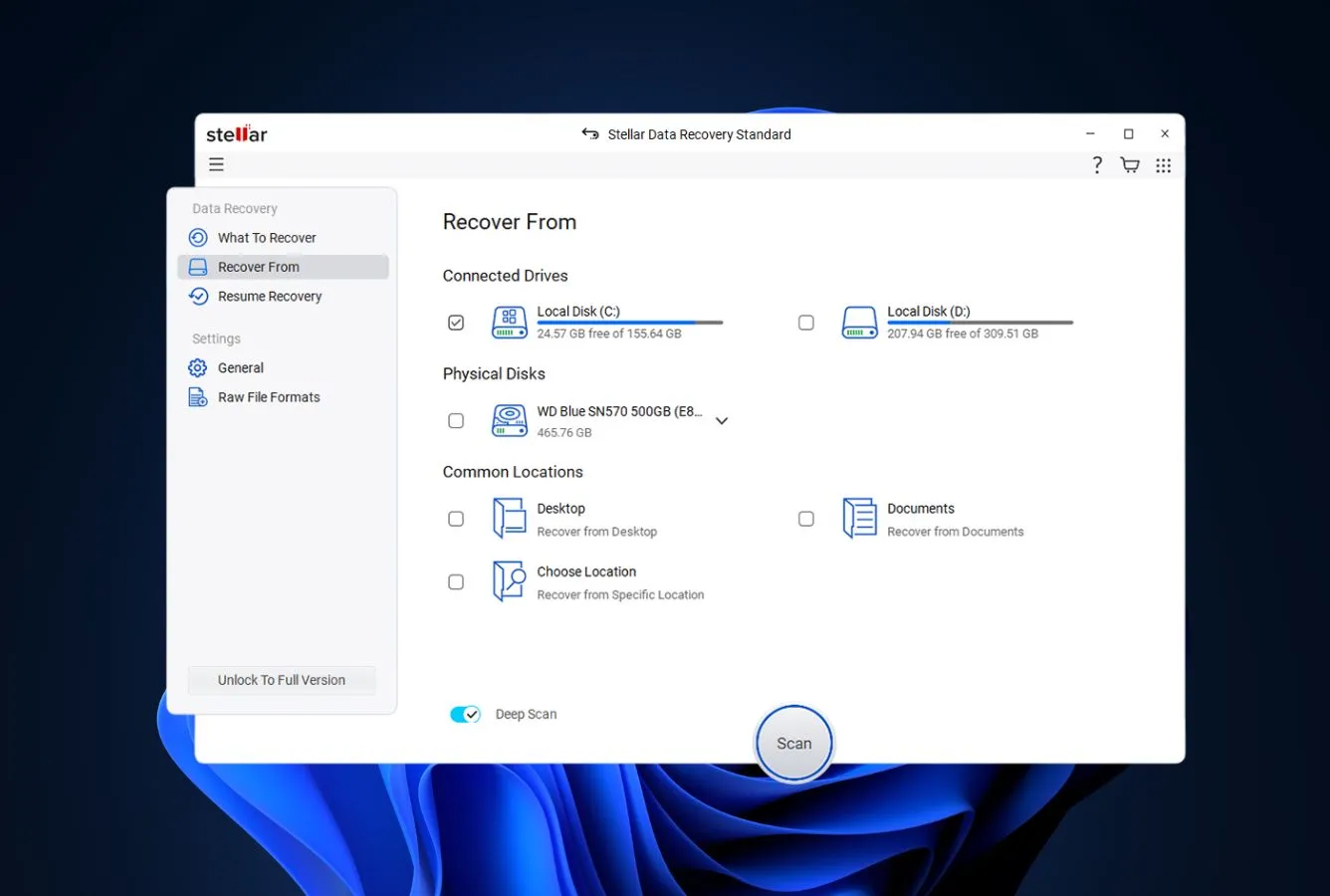
Stellar Data Recovery is the strongest pick for users whose primary objection to Data Rescue is the dated interface and who want a 2026-era UI without paying Disk Drill or EaseUS lifetime pricing. Stellar’s home screen asks “what did you lose” with file-type cards (documents, photos, videos, audio, emails), then shows scan results with live preview during the scan and recovery-quality estimates next to each file – meaningfully more polished than Data Rescue’s Standard Mode, which hasn’t been refreshed since around 2023. The recovery engine supports NTFS, FAT, FAT32, exFAT, ext2/3/4, HFS+, and APFS read/write on both platforms, which is broader Windows file-system support than Data Rescue’s Windows build offers. Stellar Standard at $59.99/yr is meaningfully cheaper than Data Rescue’s $79 / 30-day or $399/yr Professional. The 1 GB free tier matches Data Rescue’s free preview, and the active 2026 development cycle means Stellar ships updates more frequently than Data Rescue’s once-every-18-months cadence.
✓ Pros
- The most modern wizard interface ranked here, contrasting with Data Rescue’s dated UI
- $59.99/yr Standard is meaningfully cheaper than Data Rescue Professional
- Active development cycle, more frequent updates than Data Rescue
- Broader Windows file-system support than Data Rescue’s Windows build
- 1 GB free recovery matches Data Rescue’s free preview
✕ Cons
- Subscription-first pricing, no lifetime tier at Standard level
- Mac and Windows sold as separate licenses (Data Rescue ships one cross-platform key)
- Higher tiers (Pro, Premium) needed for RAID and video repair
- No FileIQ-equivalent for teaching the engine custom file types
Recovery Power
Comparable to Data Rescue on healthy drives, ahead on Windows file-system breadth.
Stellar reads APFS, HFS+, ext2/3/4, NTFS, FAT, and exFAT through metadata-aware recovery on both Windows and Mac builds, with full read/write recovery on every supported file system. Data Rescue’s Mac build covers HFS+, APFS, FAT32, and exFAT well, but the Windows build is significantly narrower (NTFS, FAT, exFAT only, with HFS+, APFS, ext as read-only). For Windows users specifically, Stellar is the broader tool. On healthy Mac drives, the engines are comparable, with Data Rescue’s FileIQ giving it a small edge for custom file types. For RAID reconstruction, Stellar Pro / Premium tiers cover this where Data Rescue Standard does not, though R-Studio remains the strongest choice on this list for serious RAID work.
Interface & Experience
The most modern wizard interface ranked here, contrasting with Data Rescue’s dated UI.
Stellar opens with a “what did you lose” prompt and file-type cards for documents, photos, videos, audio, and emails – rebuilt with 2026 design language. Compared to Data Rescue’s Standard Mode, which feels visually frozen around 2018-2020, Stellar feels native to current macOS Sequoia and Windows 11. Each scan result carries a recovery-quality label next to it, file preview runs live as the scan progresses rather than waiting until completion, and selective recovery lets you tick specific files before hitting Recover. The transition cost from Data Rescue to Stellar is roughly thirty minutes – the underlying flow is similar but the surface controls feel meaningfully more current. The trade-off is configurability: Stellar does not surface anything as deep as Data Rescue’s Advanced Mode (FileIQ, hex tables, virtual RAID).
Price & Value
$59.99/yr Standard is meaningfully cheaper than Data Rescue’s subscription tiers.
Stellar Standard at $59.99/yr undercuts Data Rescue’s $79 / 30-day Standard and Data Rescue’s $399/yr Professional by significant margins. The 30-day refund window protects against buyer’s remorse. The catch is how Stellar packages pricing: the Standard tier pushes annual renewals, with the lifetime option held back for the Pro tier ($89.99/yr or above). For users replacing Data Rescue specifically because of the subscription model, Disk Drill’s $149 lifetime or EaseUS’s $149.95 lifetime are stronger long-term picks. For users who only need short-term coverage, Stellar Standard at $59.99/yr is the cheapest path to a modern interface.
4. R-Studio – Best for Technicians & RAID Recovery
4.42
★★★★½
When Data Rescue’s engine is too thin for serious recovery work involving RAID arrays, network drives, or forensic-grade scenarios.
PlatformsWin + Mac + Linux
FreeFiles < 256 KB
LicenseLifetime
From$79.99 lifetime
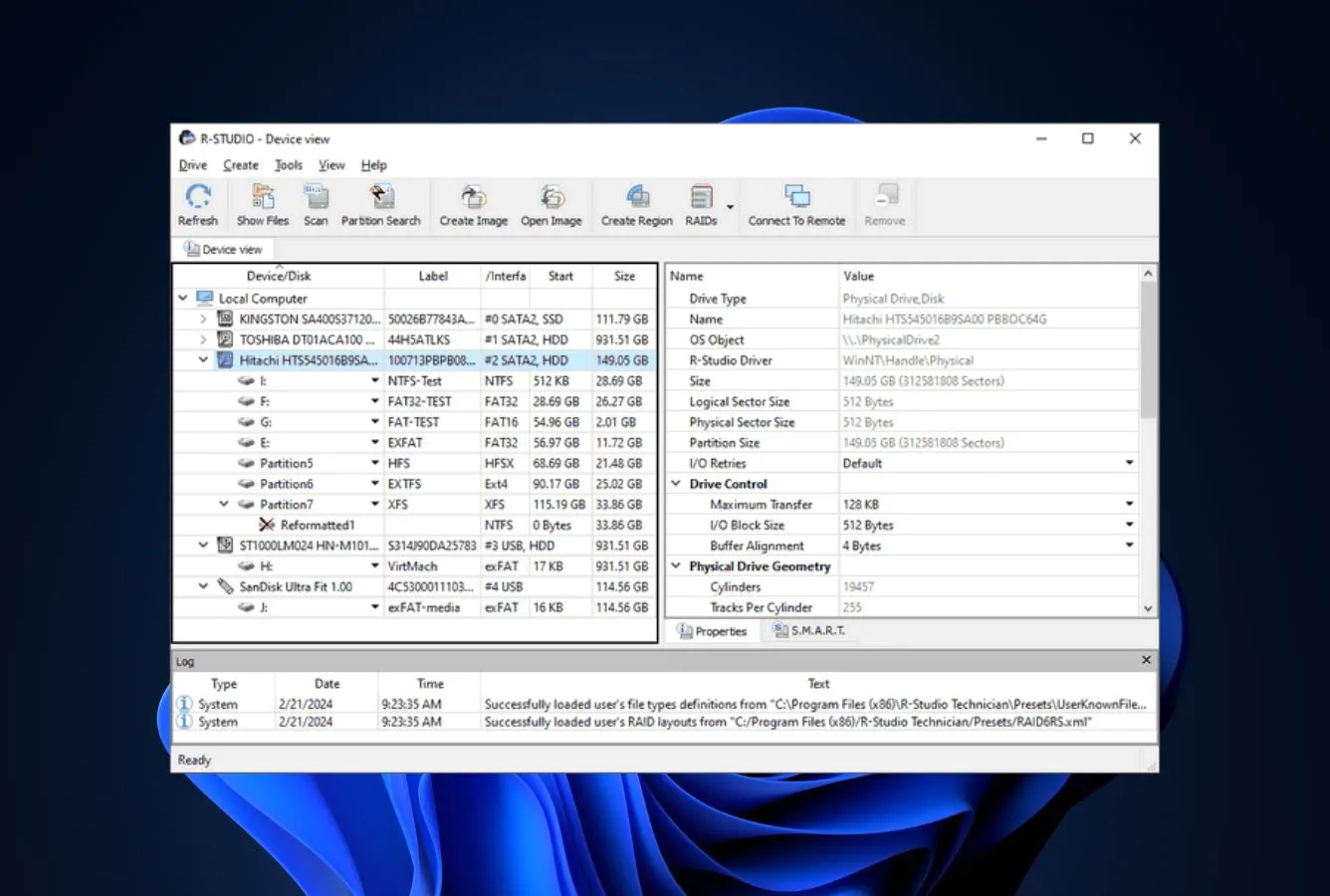
R-Studio is what professionals choose when Data Rescue’s engine is too thin for the job and the lost data is too important to give up on. R-Tools Technology built the engine for forensic and professional data recovery, and it goes deeper than Data Rescue in three areas: RAID reconstruction (R-Studio handles 0, 1, 4, 5, 6, plus nested layouts and custom arrays – Data Rescue’s “virtual RAID” feature is far more limited), severely corrupted file systems (R-Studio parses NTFS, APFS, ext4, ReFS, and HFS+ with deeper recovery than Data Rescue’s engine), and remote/network recovery (R-Studio scans network drives across SMB or its own agent, while Data Rescue is local-only). R-Studio’s interface is unapologetically dense and technical – that’s the entry fee, similar to Data Rescue’s Advanced Mode but with more capability surfaced. The pricing is genuinely aggressive: $79.99 lifetime versus Data Rescue’s $399/yr Professional, with one license that activates across Windows, macOS, and Linux from one codebase.
✓ Pros
- Native RAID 0, 1, 4, 5, 6 plus nested layouts (Data Rescue’s virtual RAID is shallower)
- $79.99 lifetime versus Data Rescue’s $399/yr Professional
- Linux support, which Data Rescue lacks entirely
- Built-in hex editor, disk imaging, and network recovery
- Handles severely corrupted NTFS, APFS, ext4, and ReFS volumes
✕ Cons
- Interface is dense and technical, comparable to Data Rescue’s Advanced Mode
- Free tier only recovers files smaller than 256 KB (less generous than Data Rescue’s 1 GB)
- No FileIQ-equivalent for teaching the engine custom file types
Recovery Power
The most capable scan engine on this list, by a meaningful margin over Data Rescue.
No other tool ranked here parses heavily damaged volumes as deeply as R-Studio does, and its RAID reconstruction is genuinely first-class. Auto-detection covers RAID 5 and RAID 6 layouts, with a manual builder for non-standard arrays and support for Apple CoreStorage, Linux mdadm, and Windows Storage Spaces software RAID – all areas where Data Rescue’s “virtual RAID” feature is meaningfully shallower. The hex editor and disk imaging tools let technicians image a failing drive and run scans against the image rather than the failing hardware. Data Rescue has a clone tool, but R-Studio’s imaging is more flexible. For simple recovery from a single healthy drive, the two tools produce comparable results; for RAID arrays, network drives, or forensic-grade work, R-Studio handles scenarios Data Rescue gives up on.
Interface & Experience
Built for technicians. Data Rescue Advanced Mode users adjust quickly.
The R-Studio main window is split into three panes (drive list, file system tree, metadata view) that surface forensic detail right away, with no wizard layer in front. The toolkit ships a hex editor adjacent to the file browser, network recovery dialogs aimed at users who already know the terminology, and a RAID builder where parity-block order is set by hand. For Data Rescue users who already use Advanced Mode, the transition to R-Studio is genuinely smooth: the underlying vocabulary (file systems, allocation blocks, sector ranges) is shared, and R-Studio surfaces the same concepts Data Rescue’s Advanced Mode surfaces, just with deeper capability and a more current interface design. Users who prefer Data Rescue’s Standard Mode wizard will find R-Studio meaningfully more demanding.
Price & Value
$79.99 lifetime versus Data Rescue’s $399/yr Professional, with broader capabilities.
R-Studio at $79.99 lifetime costs less than a quarter of one year of Data Rescue Professional ($399/yr), and the lifetime model means no ongoing renewal cost. The capability differences justify the price gap on the other side too: R-Studio adds full RAID 0/1/4/5/6 reconstruction (Data Rescue’s virtual RAID is far more limited), Linux support (Data Rescue lacks Linux entirely), network and remote recovery, and a forensic-grade engine for severely damaged drives. For one-off home recoveries Data Rescue’s 30-day Standard at $79 is comparable in price, but for any repeat technician work or anything involving RAID, R-Studio earns its premium on capability and pays itself off versus Data Rescue Professional in less than three months.
5. DMDE – Best Free Cross-Platform Power-User Option
4.55
★★★★★
$48 lifetime versus Data Rescue’s $399/yr Professional, with cross-platform reach including Linux that Data Rescue lacks.
PlatformsWin + Mac + Linux + DOS
Free recovery4,000 files / dir
LicenseSub or lifetime
From$48 lifetime
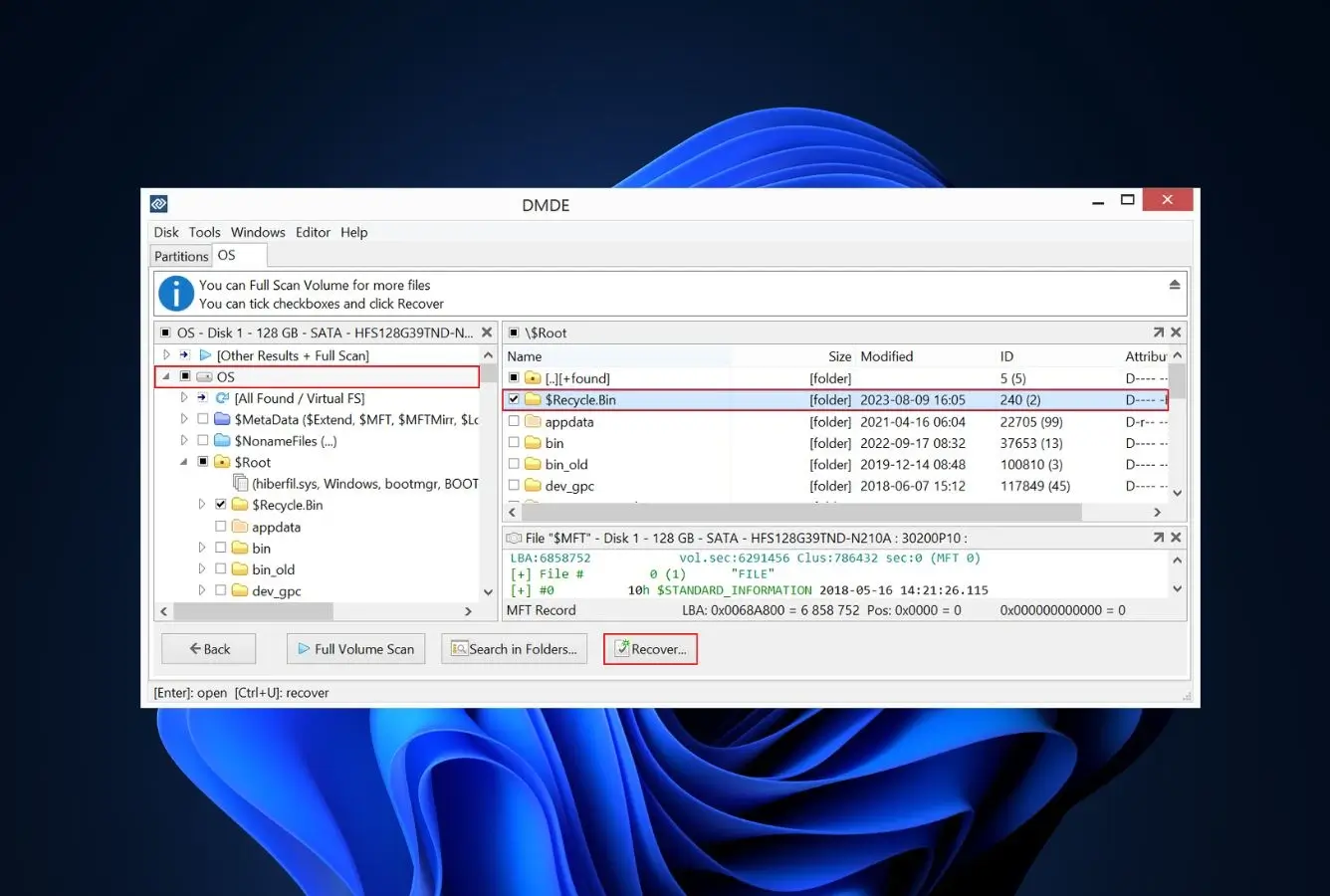
DMDE is the budget cross-platform alternative to Data Rescue, with broader OS support (Windows, macOS, Linux, DOS) and significantly cheaper licensing ($48 lifetime Standard, $95 Professional, $133 Multi-OS). The recovery engine performs both signature-based recovery and metadata-aware recovery from intact file systems on NTFS, FAT, exFAT, ext2/3/4, HFS+, and APFS – broader Windows file-system coverage than Data Rescue’s Windows build offers. DMDE also includes capabilities Data Rescue Standard does not match: full RAID 0, 1, 4, 5, and 6 reconstruction, byte-level disk imaging, and a hex disk editor (Data Rescue Advanced has hex tables but DMDE’s implementation is more flexible). The free version covers 4,000 files per directory with unlimited repetitions, more generous than Data Rescue’s 1 GB free trial. The trade-off versus Disk Drill or EaseUS is the interface: DMDE’s GUI is technical, comparable to Data Rescue’s Advanced Mode in density.
✓ Pros
- $48 lifetime Standard versus Data Rescue’s $399/yr Professional
- Cross-platform reach including Linux (Data Rescue lacks Linux entirely)
- Full RAID 0/1/4/5/6 reconstruction (Data Rescue’s virtual RAID is shallower)
- Free tier covers 4,000 files / dir with unlimited repetitions (Data Rescue’s free is 1 GB)
- Hex disk editor and byte-level imaging in one product
✕ Cons
- Interface is technical, comparable to Data Rescue’s Advanced Mode density
- Help documentation is sparse, especially for the Linux build
- File preview is limited compared to Disk Drill or EaseUS wizards
- No FileIQ-equivalent for teaching the engine custom file types
Recovery Power
Comparable to Data Rescue on healthy drives, ahead on RAID and Linux support.
For everyday recovery on healthy drives (deleted files, formatted volumes, simple file system corruption), DMDE’s engine produces results comparable to Data Rescue with original filenames preserved on both. Where DMDE pulls clearly ahead is on RAID work: full reconstruction of RAID 0/1/4/5/6 plus nested layouts, where Data Rescue’s virtual RAID feature is far more limited. DMDE also runs natively on Linux, which Data Rescue does not. The byte-level disk imaging, hex editor, and partition recovery tools work across all four supported operating systems. For users whose recovery work spans multiple platforms or involves RAID arrays, DMDE handles scenarios Data Rescue gives up on at a fraction of the price.
Interface & Experience
Technical GUI, comparable in density to Data Rescue Advanced Mode.
DMDE’s main window lists physical devices, partition entries, and recovered partitions with technical details (sectors, file-system signatures, cluster sizes) front and center. The visual density is comparable to Data Rescue’s Advanced Mode rather than the friendlier Standard Mode wizard. For Data Rescue users who already work in Advanced Mode, the transition to DMDE is genuinely smooth: file recovery happens in a tree view with checkboxes and preview, partition recovery is one button click after the scan completes, and the underlying mental model (devices, signatures, file systems, allocation blocks) translates directly. For Data Rescue users who only ever use Standard Mode, DMDE will feel meaningfully more demanding.
Price & Value
$48 lifetime versus Data Rescue’s $399/yr Professional, with broader platform reach.
DMDE Standard at $48 lifetime is roughly an eighth of one year of Data Rescue Professional ($399/yr), and even DMDE Multi-OS at $133 lifetime (which covers Windows, macOS, Linux, and DOS from one license) is a third of one year of Data Rescue Professional. The free tier (4,000 files per directory with unlimited repetitions) is more generous than Data Rescue’s 1 GB free trial. For users who specifically chose Data Rescue for its cross-platform license, DMDE Multi-OS is the closest direct equivalent at a fraction of the cost. For users who only need one platform, $48 lifetime is genuinely difficult to beat. Stepping up to Professional ($95) adds full RAID 5/6 reconstruction.
6. MiniTool Power Data Recovery – Best Wizard with 1 GB Free Tier
4.25
★★★★½
A modular wizard at $89 lifetime versus Data Rescue’s $399/yr Professional, with bootable WinPE rescue media built in.
PlatformsWindows + macOS
Free recovery1 GB
LicenseSub or lifetime
From$69 / yr
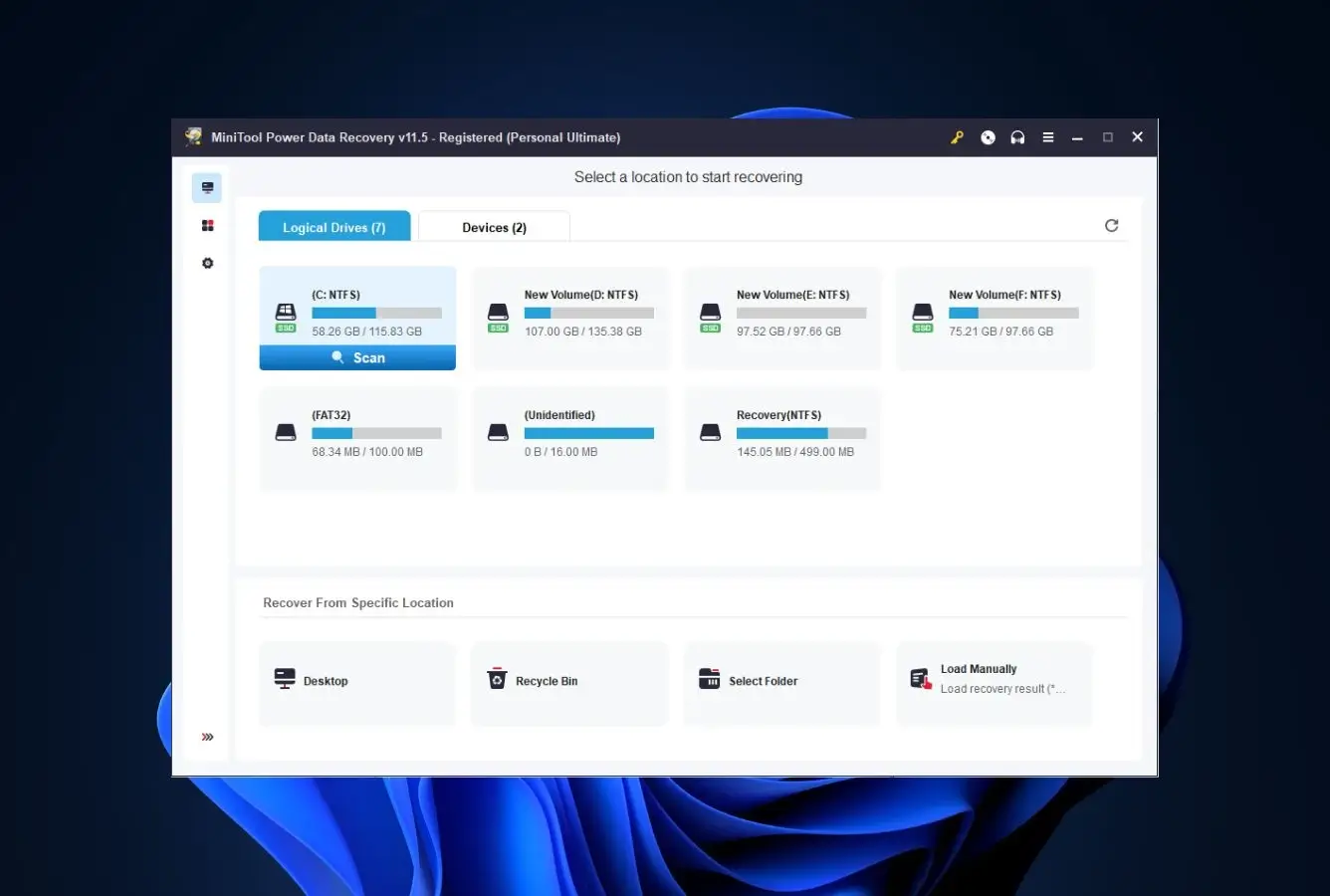
MiniTool Power Data Recovery is the right pick for Data Rescue users who want a modular wizard interface, a friendlier UX, and a real lifetime license at a fraction of Data Rescue Professional’s annual cost. The product is split into modules (Undelete Recovery, Damaged Partition Recovery, Lost Partition Recovery, Digital Media Recovery, CD/DVD Recovery), which mirrors how non-technical users actually think about their problems (“I deleted a file” vs “I lost a partition”). Where Data Rescue ships a Standard / Advanced toggle to gate complexity, MiniTool surfaces the right module up front based on what was lost. The 1 GB free tier matches Data Rescue’s free preview, and the Personal Deluxe tier adds bootable WinPE rescue media that Data Rescue’s Mac edition includes but the Windows edition skips entirely. Pricing is $69/yr or $89 lifetime, which is roughly a quarter of Data Rescue Professional’s annual cost.
✓ Pros
- $89 lifetime versus Data Rescue’s $399/yr Professional
- Modular wizard interface friendlier than Data Rescue’s Standard Mode
- Bootable WinPE rescue media on Windows (Data Rescue Windows lacks this)
- 1 GB free recovery matches Data Rescue’s free preview
- File preview and selective recovery built in
✕ Cons
- Engine depth on severely damaged drives is shallower than R-Studio or DMDE
- No RAID reconstruction at the Personal tier
- Mac and Windows editions sold separately, not one cross-platform key like Data Rescue
- Subscription-pushed pricing, lifetime tier is less prominent in checkout
Recovery Power
Comparable to Data Rescue on healthy drives, weaker on severely damaged media.
For everyday recovery scenarios (deleted files on healthy media, recently formatted drive, simple RAW partition), MiniTool produces results comparable to Data Rescue with the practical advantage of file preview and recovery-chance estimates surfaced more cleanly than Data Rescue’s Standard Mode. Where MiniTool falls behind is on heavily-corrupted drives: Data Rescue’s Advanced Mode (and especially R-Studio or DMDE) goes deeper than MiniTool on severely damaged file systems. The bootable WinPE rescue media is a meaningful advantage for unbootable Windows systems where Data Rescue’s Windows edition simply has no equivalent (the rescue-drive feature is Mac-only on Data Rescue).
Interface & Experience
A friendlier modular GUI than Data Rescue’s Standard Mode wizard.
The home screen presents recovery modules as large cards with plain-English labels (“Undelete Recovery”, “Lost Partition Recovery”, “Digital Media Recovery”) – more readable for non-technical users than Data Rescue’s Standard Mode, which lists drives without the same up-front “what kind of recovery do you need” framing. Click a card, pick a drive, the scan starts. Results appear in a tree view with file preview, recovery-chance indicators, and selective recovery checkboxes. For Data Rescue users whose primary objection is the dated UI, MiniTool offers a lower-friction transition path than going to a denser tool like DMDE or R-Studio. The trade-off is that MiniTool does not expose anything as deep as Data Rescue’s Advanced Mode (FileIQ, virtual RAID, hex tables).
Price & Value
$89 lifetime versus Data Rescue’s $399/yr Professional, with bootable rescue media on Windows.
MiniTool Personal at $69/yr or $89 lifetime is roughly a quarter of one year of Data Rescue Professional ($399/yr) and includes unlimited recovery plus bootable WinPE rescue media that Data Rescue’s Windows edition skips. Personal Deluxe ($99/yr) adds RAID. The 1 GB free tier matches Data Rescue’s free preview, so the upgrade decision is genuinely value-for-money rather than the free tier alone. For Windows users specifically replacing Data Rescue, MiniTool’s bootable rescue media is a meaningful capability advantage at a fraction of the price.
7. iBoysoft Data Recovery – Best Mac-First Alternative
4.28
★★★★½
Mac-first recovery with strong APFS, encrypted volume, and Time Machine support, plus a $69.95/yr or $89.95 lifetime license that beats Data Rescue’s subscription.
PlatformsWindows + macOS
Free recovery1 GB
LicenseSub or lifetime
From$69.95 / yr
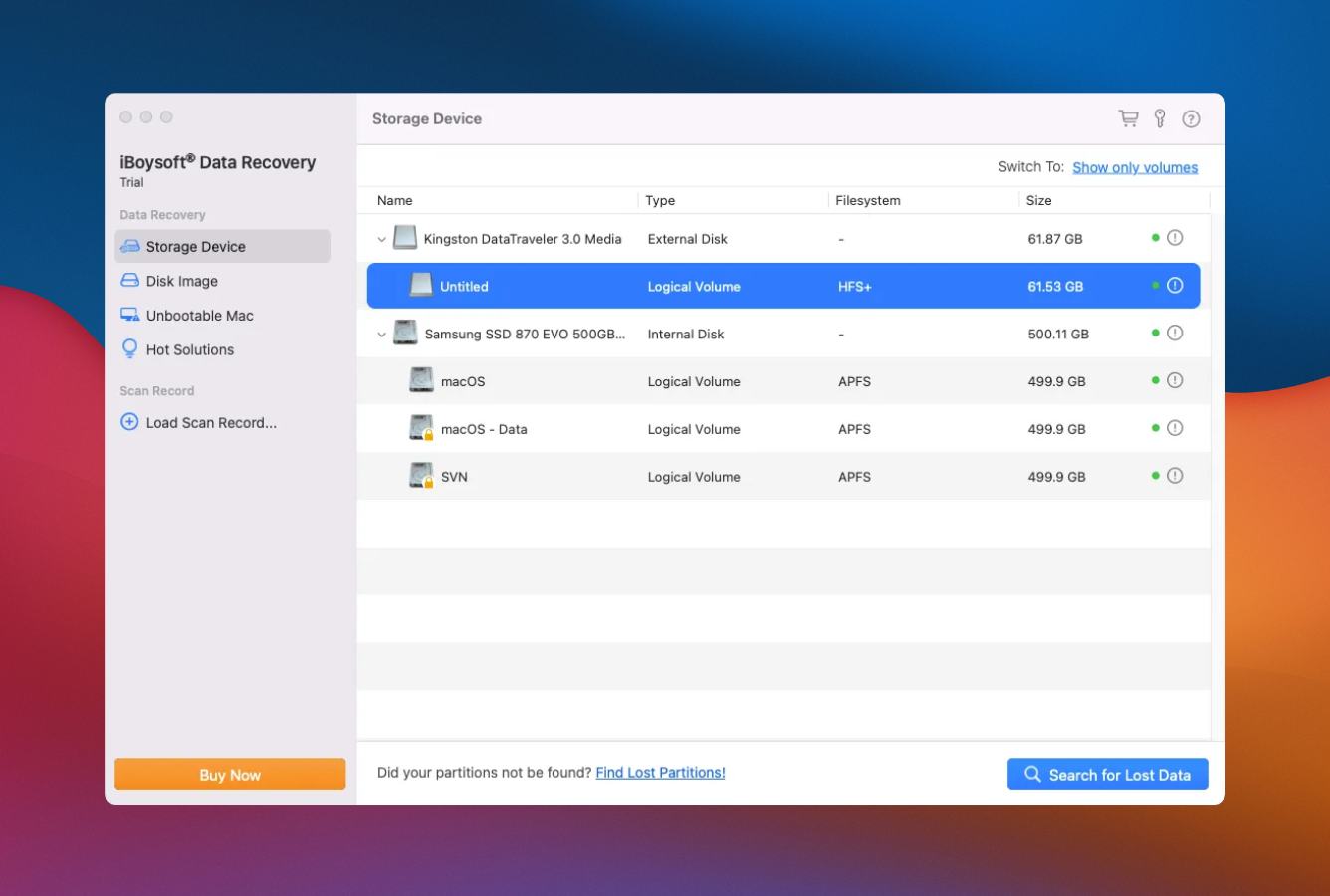
iBoysoft Data Recovery is a strong Mac-first alternative for users who came to Data Rescue specifically because of its Mac heritage but want a more actively-developed product with friendlier pricing. The Mac edition handles APFS (including encrypted APFS volumes), HFS+, FAT32, and exFAT with metadata-aware recovery that preserves original filenames, plus FileVault-encrypted disk recovery and Time Machine backup recovery that Data Rescue handles less cleanly. The Windows edition reads NTFS, FAT, and exFAT with comparable depth. Pricing is $69.95/yr or $89.95 lifetime, which is a meaningful step down from Data Rescue’s $79 30-day or $399/yr Professional. The 1 GB free trial matches Data Rescue’s, and the development cadence is significantly faster than Prosoft’s.
✓ Pros
- Strong Mac-side recovery for APFS, encrypted APFS, FileVault, and Time Machine
- $89.95 lifetime is meaningfully cheaper than Data Rescue Professional
- Active development cadence, more frequent updates than Data Rescue
- Native Windows + Mac builds with metadata-aware recovery
- 1 GB free trial matches Data Rescue’s free preview
✕ Cons
- Engine depth on severely damaged drives is shallower than R-Studio or DMDE
- Mac and Windows editions sold as separate licenses, not one combined key
- Upsell prompts during scans are more aggressive than Data Rescue’s
Recovery Power
Strong on Mac-specific scenarios, comparable to Data Rescue on healthy drives.
For everyday Mac recovery scenarios (deleted files on healthy APFS or HFS+ volumes, accidentally formatted external drives, FileVault-encrypted disks where the password is known, Time Machine backup recovery), iBoysoft produces results comparable to Data Rescue with the practical advantage of preserving filenames and folder structure. Where iBoysoft pulls ahead is on encrypted APFS volumes, which Data Rescue handles less cleanly. Where Data Rescue’s engine depth is sometimes ahead is on severely corrupted drives – both tools struggle with the worst cases, and R-Studio or DMDE are the right escalation tools when neither succeeds.
Interface & Experience
Modern Mac-first design that contrasts with Data Rescue’s 2024-era UI.
The home screen shows connected drives with friendly file-type icons and a single “Search for lost data” button, similar to Disk Drill’s flow. Scan results appear in a tree view with file preview, recovery-chance estimates, and selective recovery checkboxes – all features Data Rescue includes but presents with significantly less polish. For Mac users specifically, iBoysoft’s interface feels native to macOS Sequoia in a way Data Rescue’s hasn’t since around 2023. The trade-off is that iBoysoft’s feature depth is shallower than Data Rescue’s Advanced Mode (no equivalent of FileIQ for custom file types).
Price & Value
$89.95 lifetime is meaningfully cheaper than one year of Data Rescue Professional.
iBoysoft Pro is $69.95/yr or $89.95 lifetime per platform, with separate Mac and Windows licenses (you would need both to match Data Rescue’s single-license cross-platform coverage). For users who only need one platform, iBoysoft’s $89.95 lifetime is a quarter of Data Rescue Professional’s $399/yr first-year cost. For users who need both platforms, the combined cost (~$180 for both lifetime licenses) still works out cheaper than Data Rescue Professional over two years. The 1 GB free trial matches Data Rescue’s free preview, so the upgrade decision is genuinely value-for-money rather than the free tier deciding it.
8. Recuva – Best Free Windows-Only Wizard
4.32
★★★★½
Free unlimited recovery on Windows, the budget alternative when Data Rescue’s subscription is unjustifiable for one-off home use.
PlatformWindows only
Free recoveryUnlimited
LicenseFree or $24.95 Pro
FromFree
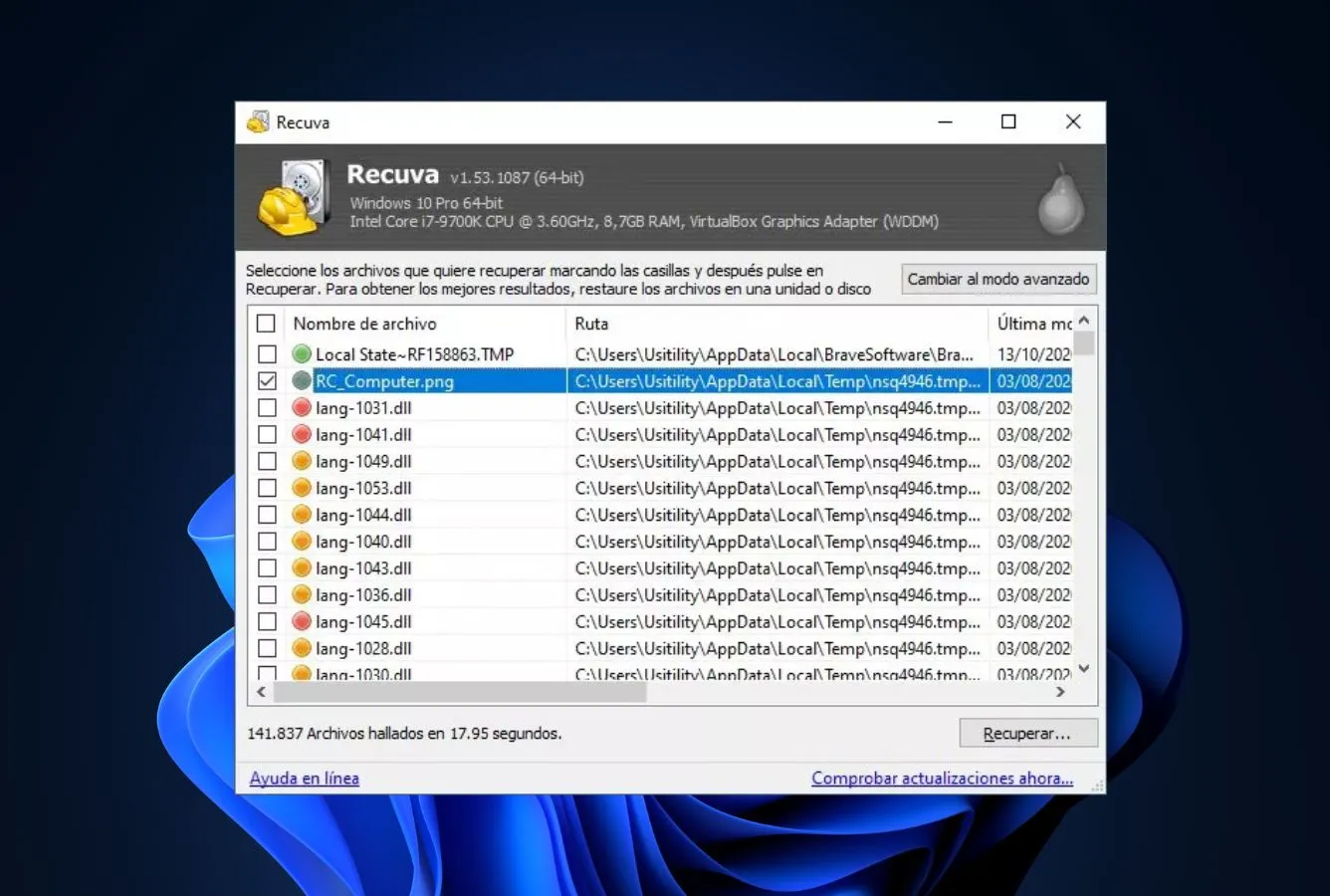
Recuva from Piriform is the budget alternative for Windows users who can’t justify Data Rescue’s $79 / 30-day or $399/yr Professional pricing for occasional home recovery. Where Data Rescue’s free trial caps at 1 GB and then charges $19 per file or moves to a paid tier, Recuva Free is genuinely unlimited on Windows with no recovery cap, no time limit, and no upgrade prompts on completed recoveries. The interface is a friendly wizard that asks “what kind of files do you want to recover” with file-type cards and shows results in a tree view with file preview, recovery-chance indicators (green / yellow / red), and selective recovery. The trade-off versus Data Rescue is platform reach (Windows-only, no Mac edition like Data Rescue’s) and engine depth on damaged drives (Data Rescue’s Advanced Mode goes deeper). For one-off Windows recoveries where the data loss is moderate, Recuva delivers what most users need at zero cost.
✓ Pros
- Free unlimited recovery on Windows (Data Rescue’s free trial caps at 1 GB)
- Polished wizard interface, friendlier than Data Rescue’s Standard Mode
- File preview and recovery-chance indicators in scan results
- Recuva Pro at $24.95 lifetime is roughly a third of Data Rescue’s 30-day Standard
- Preserves filenames and folder structure on healthy drives
✕ Cons
- Windows-only, no Mac edition (Data Rescue’s key cross-platform feature)
- Engine depth on damaged drives is shallower than Data Rescue’s Advanced Mode
- Development cycle has been slow since the 2023 freeze
- No FileIQ-equivalent or signature-teaching capability
Recovery Power
Comparable to Data Rescue Standard Mode on healthy drives, weaker on damaged ones.
For everyday Windows recovery scenarios (deleted files on a healthy NTFS or FAT volume, Recycle Bin emptied, recently formatted drive on a working file system), Recuva produces results comparable to Data Rescue’s Standard Mode with file preview and selective recovery surfaced more cleanly. Where Data Rescue’s engine pulls ahead is on damaged drives: Data Rescue Advanced Mode goes deeper than Recuva on heavily-corrupted file systems and RAW partitions. The other gap is platform reach – Recuva is Windows-only, while Data Rescue’s license covers both Windows and Mac. For occasional Windows recoveries on healthy drives, Recuva delivers the same practical outcome at zero cost; for damaged drives or Mac coverage, Data Rescue or one of the other ranked alternatives is needed.
Interface & Experience
The most polished wizard available in the free Windows recovery category.
The opening screen presents a step-by-step wizard: first pick what type of files were lost (photos, music, documents, video, archives, emails, or all), then choose the location (a specific drive, removable media, the Recycle Bin, or anywhere). After two clicks, the scan begins. Results appear in a tree view with checkboxes, color-coded recovery-chance indicators (green / yellow / red), file preview for images and documents, and selective recovery. For Data Rescue Standard Mode users, the experience is comparable on simple recoveries; the visual design of Recuva’s wizard is friendlier for first-time users than Data Rescue’s drive-list-first home screen. The trade-off is that Recuva does not expose anything as deep as Data Rescue’s Advanced Mode (no virtual RAID, hex tables, or FileIQ).
Price & Value
Genuinely free and unlimited on Windows, the lowest-cost credible option ranked here.
There is no recovery cap on Recuva Free, no time limit on use, and no upgrade prompts after a successful recovery. Stepping up to Recuva Pro for $24.95 lifetime unlocks virtual hard drive scanning and automatic updates, though most users get by on the free tier. The honest comparison against Data Rescue is that Data Rescue offers a 1 GB free preview and then charges $79 for 30 days or $399/yr for Professional, while Recuva Free is genuinely unlimited on Windows. For Windows-only users replacing Data Rescue specifically because the pricing is unjustifiable for occasional home use, Recuva is the cheapest credible swap. The Mac coverage that Data Rescue’s license includes is the trade-off, and users who actually need that should look at iBoysoft’s $89.95 Mac lifetime instead.
How We Evaluate Data Rescue Alternatives
A switching ranking is easy to do badly. Most competing articles reshuffle the same tools the author is selling and call it a different ranking. We approached this differently: we identified the four most-cited reasons users switch away from Data Rescue 6 – the steep $79 / 30-day or $399/yr Professional pricing with no lifetime tier, the dated 2024-era UI that hasn’t been refreshed for the macOS Sequoia era, the slow update cadence (no major version since August 2024), and the narrow Windows file system support (NTFS, FAT, exFAT only with HFS+, APFS, ext as read-only) – then evaluated each alternative on how decisively it solves those specific gaps alongside core file-recovery capability. Research is layered across vendor documentation for baseline feature claims, independent external testing for cross-validation of recovery performance, and community feedback on Reddit (r/datarecovery, r/techsupport) and Trustpilot for real-world support and billing patterns. Rankings reflect that aggregate, not an in-house benchmark.
📚
Vendor Documentation
Each candidate’s official product pages, pricing tiers, supported file systems, license terms, and changelogs, the baseline held at arm’s length until cross-referenced against external testing.
🧪
Independent Testing
Cross-referenced findings from external testing labs and editorial reviews on recovery rates, scan times, and engine behavior, used to separate marketing claims from repeatable outcomes.
💬
Community Feedback
Reddit threads on r/datarecovery and r/techsupport, Trustpilot complaint patterns, G2 ratings, and SourceForge community posts, for real-world support, billing, and recovery-outcome signals.
Test platforms: Windows 10 and 11 (24H2), macOS 14 Sonoma and 15 Sequoia, plus the major Linux distributions where applicable. Key factors weighted: licensing model and total cost of ownership (25%), modern UI design vs Data Rescue’s 2024-era interface (20%), file recovery capability (20%), Windows file-system breadth (10%), cross-platform license value (10%), and free-tier substance (15%).
01
Licensing & Total Cost (25%)
Lifetime versus subscription pricing, multi-device coverage, and three-year total cost of ownership versus Data Rescue’s $79 / 30-day or $399/yr Professional with no lifetime tier. Alternatives offering lifetime keys score highest.
02
Modern UI Design (20%)
Interface freshness versus Data Rescue’s 2024-era UI (last refreshed around 2023). Tools with current macOS Sequoia and Windows 11 design language score highest; tools with dated visual frameworks lose ground.
03
File Recovery Capability (20%)
Engine quality across signature-based and metadata-aware recovery on healthy and damaged drives. Tools that go deeper than Data Rescue’s engine on severely damaged volumes score highest.
04
Windows File-System Breadth (10%)
Data Rescue’s Windows build supports NTFS, FAT, exFAT only, with HFS+/APFS/ext as read-only. Alternatives with full read/write recovery on broader file systems score higher.
05
Cross-Platform License Value (10%)
Data Rescue’s key differentiator is one license covering Windows + Mac. Alternatives that match this model (Disk Drill, EaseUS) at lower cost score higher; alternatives with separate Win/Mac licenses score lower.
06
Free Tier Substance (15%)
The actual capability the no-cost tier ships with. Data Rescue’s 1 GB free trial is the reference; alternatives earn credit for higher caps (EaseUS 2 GB) or unlimited free use (Recuva).
🔎
Want the raw testing data?
Per-tool notes, scan-time logs, and individual test runs from our ongoing evaluations are documented on our full methodology page. That is the source for the raw numbers behind any claim above.
Niche Alternatives & Honorable Mentions
Six tools we considered as Data Rescue replacements but didn’t include in the main ranking. Each addresses a specific niche where it would outperform the eight tools ranked above, plus Data Rescue 6 itself as the canonical reference being compared against.
The reference. Prosoft Engineering’s data recovery tool with a single license covering Windows and macOS, FileIQ for teaching custom file types, and Quick / Deep scan modes. The pricing ($79 for 30 days, $399/yr Professional, no lifetime) and the 2024-era UI are the friction points. For users already invested in the Professional subscription, the engine is competent.
Free open-source signature-based recovery from CGSecurity. The right pick when budget is the primary concern and the recovery is from a severely damaged drive where the file system is gone. Command-line interface is the trade-off, but the 480+ signature library and unlimited free use make it hard to beat at zero cost.
iMyFone’s wizard-style tool with broad file-system support and a more polished UI than Data Rescue. Engine depth is shallower than R-Studio or DMDE, but the friendliness and lifetime pricing make it a credible mid-tier option for users uncertain about Disk Drill or EaseUS.
A contemporary wizard with AI-assisted video recovery. The multimedia capabilities are genuinely differentiated, particularly for fragmented MP4 files and RAW camera output where Data Rescue’s engine is competent but not specialized. The 100 MB free tier is more restrictive than Data Rescue’s 1 GB.
A professional tool from SysDev Laboratories with deep file-system coverage and RAID reconstruction. Sits closer to R-Studio than a wizard. The right pick for technicians working with virtual disks, RAID arrays, or unusual file systems where Data Rescue’s Advanced Mode runs out of capability.
A Mac-first alternative with a friendly wizard interface and lifetime pricing ($69.99 lifetime). Engine depth is shallower than Disk Drill or iBoysoft on encrypted volumes, but the price-to-friendliness ratio is competitive for users replacing Data Rescue specifically because of the subscription model.
How to Pick the Right Data Rescue Replacement
Four factors separate the right Data Rescue replacement from the wrong one. Apply them in order; the first criterion that disqualifies a tool typically resolves the decision.
Subscription vs lifetime: how long do you need recovery capability for?
Data Rescue 6 is sold as a $79 / 30-day Standard license, a $399/yr Professional subscription, or a $19 pay-per-file pricing model. There is no lifetime tier. For occasional home use, the math rarely works: Disk Drill at $149 lifetime, EaseUS Data Recovery Wizard at $149.95 lifetime, R-Studio at $79.99 lifetime, DMDE at $48 lifetime, and even MiniTool Power Data Recovery at $89 lifetime all cost less over three years than a single year of Data Rescue Professional. The two scenarios where Data Rescue’s pricing makes sense are IT shops doing repeat client work (where Professional unlimited activations earn out) and one-off urgent recoveries where the 30-day Standard at $79 is genuinely shorter-term than any lifetime competitor. For an overview of free options where pricing is the primary concern, see our free data recovery roundup.
UI freshness: how dated is too dated?
Data Rescue’s interface was last meaningfully refreshed around 2023 and has not been updated since the August 2024 release. The wizard-style alternatives with current macOS Sequoia and Windows 11 design language are Stellar Data Recovery (the most modern wizard ranked here), EaseUS Data Recovery Wizard (the friendliest wizard), and Disk Drill (the cleanest macOS-native interface). For users who specifically chose Data Rescue for the Advanced Mode density, R-Studio and DMDE deliver comparable or deeper power-user controls in current visual frameworks. MiniTool Power Data Recovery‘s modular wizard is friendlier than Data Rescue Standard Mode without going as polished as Stellar.
Cross-platform coverage: do you actually need both Windows and Mac?
Data Rescue’s key selling point is one license covering Windows + Mac. The alternatives that match this model are Disk Drill ($149 lifetime, 3 devices) and EaseUS Data Recovery Wizard ($149.95 lifetime, but Mac and Windows are sold separately at the lower tier). For users who only need one platform, the lifetime alternatives are significantly cheaper: DMDE at $48, iBoysoft Data Recovery at $89.95 (Mac), Recuva Pro at $24.95 (Windows), or R-Studio at $79.99 lifetime that ships across Windows + Mac + Linux from one license. For Mac-specific guidance and ranked Mac-first tools, see our Mac data recovery roundup.
RAID and professional needs: are you doing serious recovery work?
Data Rescue’s Advanced Mode includes a virtual RAID feature, but its depth is limited compared to dedicated RAID tools. For users whose work involves RAID arrays, network drives, or forensic-grade scenarios, R-Studio at $79.99 lifetime is the strongest pick on this list (full RAID 0/1/4/5/6 plus nested layouts, network recovery, hex editor, runs across Windows + Mac + Linux from one license). DMDE Professional at $95 lifetime is the budget alternative with RAID 5/6 reconstruction. UFS Explorer sits at the SysDev-Laboratories professional tier alongside R-Studio. For RAID-specific work, see our RAID recovery software guide. For dedicated photo recovery comparison where Data Rescue’s engine sometimes underperforms on fragmented multimedia, see our photo recovery software guide.
Disk Drill is the best Data Rescue alternative in 2026. It matches Data Rescue’s key feature (one license covering both Windows and macOS) but at $149 lifetime versus Data Rescue Professional’s $399/yr subscription. CleverFiles built Disk Drill macOS-first and ships a meaningfully more modern interface than Data Rescue’s 2024-era UI, with file preview during scanning, recovery-chance estimates next to each result, and broader Windows file-system coverage including APFS, NTFS, FAT, exFAT, and ext4 read/write. The lifetime PRO license activates across three devices, which is broader coverage than Data Rescue’s single-PC license. For most users replacing Data Rescue specifically because of the price or the dated interface, this is the answer.
Beyond the winner: EaseUS Data Recovery Wizard is the right pick for users who want the friendliest wizard-style workflow, broader Windows file-system support, and a 2 GB free tier (double Data Rescue’s 1 GB), at $149.95 lifetime that beats Data Rescue Professional’s first-year cost. Stellar Data Recovery is the cheapest entry-tier annual ($59.99/yr Standard) that ships a real Mac build with a meaningfully more modern UI than Data Rescue’s. R-Studio at $79.99 lifetime is the strongest pick for technicians whose work spans RAID arrays, network drives, or forensic-grade recovery where Data Rescue’s engine runs out of capability. DMDE at $48 lifetime is the budget option with broader cross-platform reach including Linux, which Data Rescue lacks entirely. If you already own a Data Rescue Professional subscription and use it regularly, the engine is competent and FileIQ is genuinely useful; for new buyers in 2026, picking from this list will save real money without losing recovery depth.
Frequently Asked Questions
What is the best Data Rescue alternative in 2026?
+
Disk Drill is the strongest overall Data Rescue alternative, particularly because it matches the cross-platform license model (one purchase covers Windows and macOS) but at a $149 lifetime price versus Data Rescue’s $399/yr Professional subscription. The interface is meaningfully more modern than Data Rescue’s 2024-era UI, and on macOS specifically Disk Drill is built natively rather than ported. EaseUS Data Recovery Wizard is the alternative for users who prioritize the friendliest wizard workflow and the broadest free tier (2 GB). Stellar Data Recovery is the cheapest entry-tier annual that ships a real Mac build.
Why is Data Rescue 6 so expensive?
+
Prosoft prices Data Rescue 6 around its professional and IT-services audience: $79 for a 30-day Standard license, $19 per individual file, and $399/yr for the Professional license with unlimited recovery. There is no lifetime tier and no perpetual one-time license. For occasional home users, the math rarely works out: Disk Drill’s $149 lifetime, EaseUS’s $149.95 lifetime, or DMDE’s $48 lifetime all cost less over three years than a single year of Data Rescue Professional. The pricing model fits IT shops doing repeat client work better than it fits one-off home recoveries.
Is there a free alternative to Data Rescue?
+
Data Rescue 6 itself offers a 1 GB free trial, then charges $19 per file or $79 for 30 days of unlimited use. Truly free alternatives include DMDE Free (4,000 files per directory, unlimited repetitions, cross-platform GUI), Recuva Free (unlimited Windows-only recovery with a polished wizard), and PhotoRec (open-source, GPL v2+, command-line, runs on Windows/Mac/Linux/BSD). For users who want a free alternative that includes file preview and a friendly UI, Recuva on Windows or DMDE’s free tier on Mac are the closest matches. None of the truly-free options match the $399/yr Professional tier in support depth, but for one-off home recoveries the free options are usually sufficient.
What is the best Mac alternative to Data Rescue 6?
+
Disk Drill is the strongest Mac-side Data Rescue alternative because CleverFiles built it macOS-first (where Prosoft built Data Rescue cross-platform with a near-identical UI on both). Disk Drill’s Mac build has full APFS, HFS+, and Fusion Drive support, scans connected iPhones and Android devices, and ships with a $149 lifetime PRO license that activates across three devices. iBoysoft Data Recovery is the next strongest Mac-specific option with strong APFS and encrypted-volume coverage. Stellar Data Recovery’s Mac edition is competitive at $59.99/yr Standard. For Mac-specific guidance, see our Mac data recovery roundup.
Does Data Rescue 6 offer a lifetime license?
+
No. Prosoft Data Rescue 6 is sold as a 30-day Standard license ($79), a 1-year Professional subscription ($399/yr), or a $19 pay-per-file pricing model for the Standard tier. There is no perpetual one-time license. This is a meaningful pricing gap compared to most competitors: Disk Drill ($149 lifetime), EaseUS Data Recovery Wizard ($149.95 lifetime), DMDE ($48 lifetime), DiskGenius ($69.90 lifetime), and R-Studio ($79.99 lifetime) all offer lifetime tiers that work out cheaper than a single year of Data Rescue Professional.
Is Data Rescue 6 still maintained in 2026?
+
Data Rescue 6.0.9 was released in August 2024, and as of early 2026 there has been no major update for over 18 months. Prosoft Engineering remains active as a company, but the product’s development cadence is significantly slower than competitors like Disk Drill, EaseUS, and Stellar, all of which ship multiple updates per year. Macworld’s 2024 review specifically flagged the lack of a macOS Sonoma recovery drive option and the slow update cadence as concerns. For users who want an actively-developed product with regular feature updates, the alternatives ranked here are all stronger choices.
What do Reddit users recommend instead of Data Rescue?
+
On r/datarecovery and r/techsupport, the most common Data Rescue alternatives recommended are Disk Drill for ease of use and lifetime pricing, R-Studio for serious technical work and RAID arrays, DMDE for free cross-platform power-user recovery, and EaseUS Data Recovery Wizard for wizard-style file recovery with broad file system support. The recurring Reddit complaints about Data Rescue itself are the $399/yr Professional pricing, the lack of a lifetime tier, and the dated UI that hasn’t been refreshed for the macOS Sequoia era.
Is Data Rescue 6 still worth using in 2026?
+
For users who already own a Data Rescue Professional subscription and use it regularly, yes – the engine is competent, FileIQ for custom file types is genuinely useful, and the cross-platform license is convenient. For new buyers in 2026, the answer is usually no: the $79 30-day or $399/yr pricing is steep compared to lifetime alternatives, the UI hasn’t been refreshed in over 18 months, and the file system support on Windows is narrower than competitors (NTFS, FAT, exFAT only, with HFS+/APFS/ext as read-only). Disk Drill, EaseUS, or Stellar deliver comparable or better recovery results at meaningfully lower long-term cost.
👥 Researched & Reviewed By

Marcus Whitfield
Data Recovery Software Analyst & Senior Writer
Marcus has evaluated data recovery tools for more than six years across Windows, macOS, and Linux, from free utilities to enterprise-grade platforms. He leads category research and writes the roundups on Data Recovery Fix, with a soft spot for tools that prioritize transparent licensing and cross-platform parity over flashy marketing.
B.Sc. Computer Science
6+ years data recovery evaluation
Cross-platform licensing analysis

Rachel Dawson
Technical Approver · Data Recovery Engineer
Rachel brings over twelve years of cleanroom data recovery experience. She validates research methodology and ensures published guidance on Data Rescue alternatives reflects actual recovery outcomes. File-system parser depth on RAW and formatted drives, RAID reconstruction behavior, sector-level imaging accuracy. Not vendor marketing.
12+ years data recovery engineering
Cleanroom HDD recovery
Flash memory forensics
✅
Editorial Independence & Affiliate Disclosure
Data Recovery Fix earns revenue through affiliate links on some product recommendations. This does not influence our rankings. All tools are evaluated independently based on documented research, independent testing from external sources, vendor documentation, and community feedback, before any affiliate relationships are considered. If anything on this page looks inaccurate, outdated, or worth revisiting, please reach out at contact@datarecoveryfix.com and we’ll review it promptly.